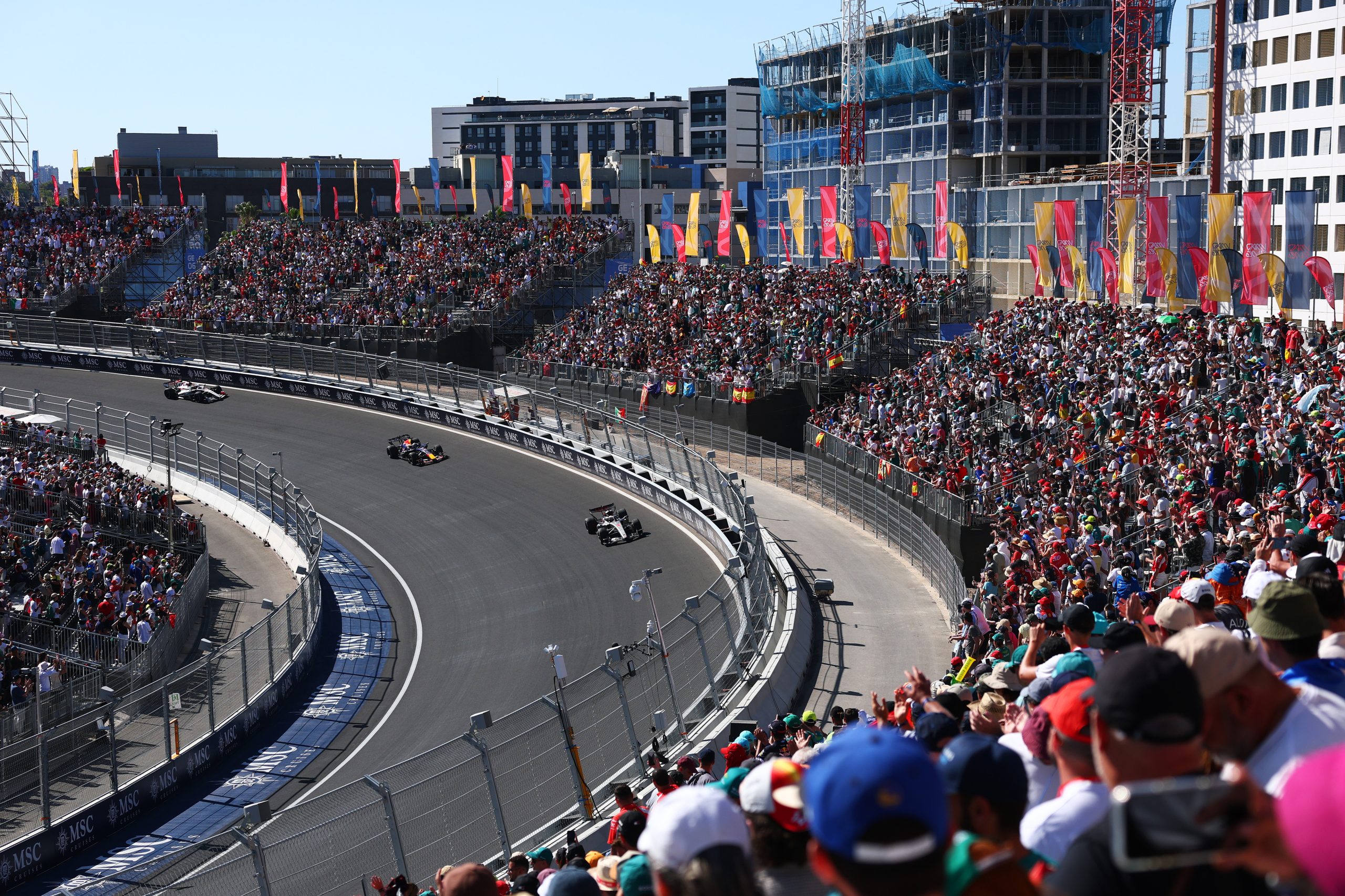
Madrid did not aim small. Its first Formula 1 weekend at Madring brought packed grandstands, a huge paddock, and three championships learning one circuit together. Around 350,000 spectators attended across the weekend, while 115,000 used the metro to reach the venue.
The event looked ready for Formula 1. The harder question is whether the circuit was ready to produce Formula 1 racing.
Across F1, F2 and F3, the answer became uncomfortable. Madring challenged drivers and delivered tense qualifying sessions. Yet the races kept showing the same weakness. Track position mattered too much, while genuine passing remained scarce.
Madring Was Built for Commitment
As a driving challenge, Madrid delivered more than its early critics expected. The 5.414 kilometre layout mixes public roads with purpose built sections and contains 22 corners. La Monumental gives the lap its signature, with roughly 550 metres of banking that reaches 24 percent.
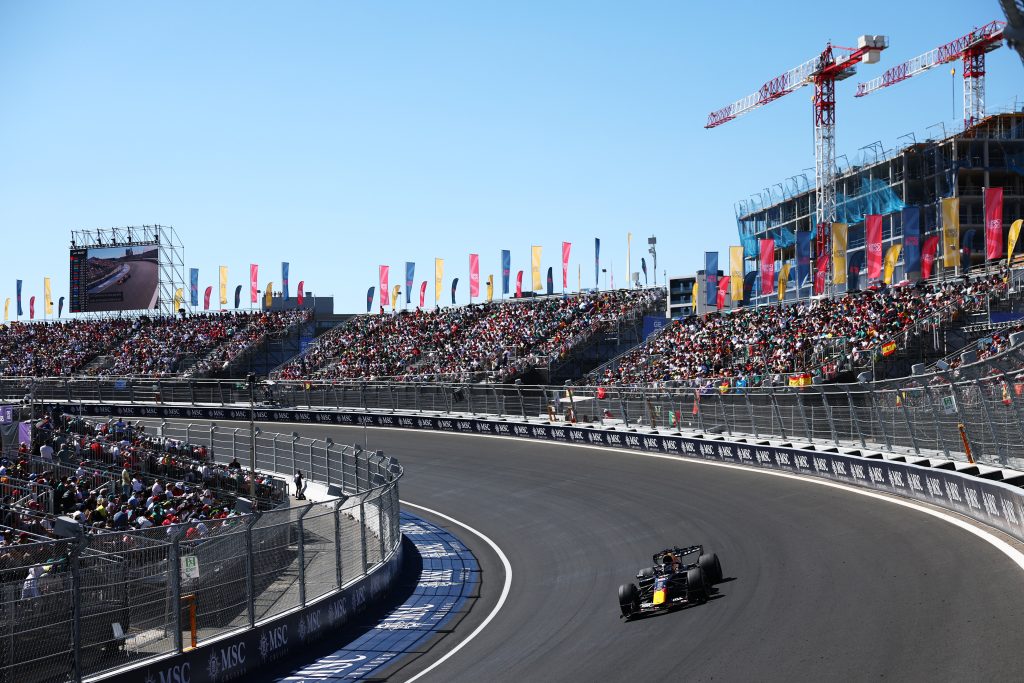
The walls also gave the place real consequence. George Russell described sections as tight and blind before the weekend, with almost no margin for error. Formula 3 drivers reached a similar verdict during their August test. Freddie Slater called the circuit one of his favourites, while Taito Kato and Tuukka Taponen highlighted its difficulty and character.
Practice backed that up. Russell led the first F1 session, then Kimi Antonelli topped both Friday afternoon and Saturday morning. Those sessions also produced several interruptions, including crashes for Arvid Lindblad, Lewis Hamilton and Oliver Bearman. Bearman’s damage even ruled him out of qualifying.
Madring did not feel sterile from the cockpit. It demanded precision from the first lap.
Qualifying Was the Best Advertisement
The debut weekend came alive when outright lap time became the only target. F1 qualifying delivered a genuine fight for pole. Lando Norris beat Antonelli by only 0.011 seconds, with Max Verstappen third. That looked even stronger after Norris had lost almost all of FP2 with a gearbox problem.
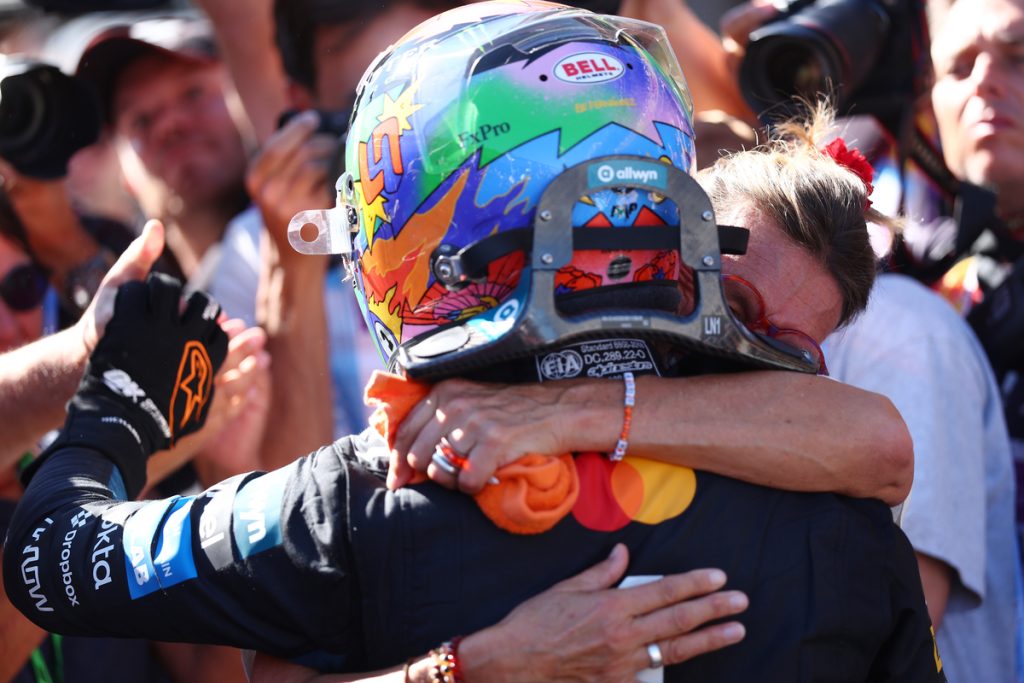
Formula 2 made the same point in a messier way. Dino Beganovic took pole, but the session featured red flags after incidents for Kush Maini, Nicolas Varrone and Colton Herta. Walls punished small mistakes immediately.
Formula 3 carried an unusual expanded finale after the loss of its Bahrain round. Madrid therefore featured two qualifying sessions and two Feature Races alongside the Sprint. Taito Kato took the first pole by 0.012 seconds. Tuukka Taponen led the second session and secured the best starting place for Sunday’s finale.
That became Madring at its best. The track rewarded bravery, preparation and confidence. Drivers could not hide a weak lap behind race pace later.
Unfortunately, that final point also became the weekend’s biggest problem.
The Drivers Saw the Racing Problem Coming
Nobody needed Sunday afternoon to identify the danger. Verstappen rated his overtaking chances as almost nil after qualifying. He also argued that drivers should have more influence when new circuits are designed.
His verdict on La Monumental carried more humour. Asked about the challenge, Verstappen said:
“Well, I wanted to take it flat out, but my battery died. That was my Monumental experience.”
The joke captured an odd feature of the circuit. La Monumental looks spectacular and feels dramatic, but spectacle does not automatically create racing.
Formula 2 drivers had already reached the same conclusion. Emerson Fittipaldi expected starts to provide many of the best passing chances because overtaking looked so difficult. Formula 3’s own technical preview also warned that limited opportunities would make qualifying decisive.
The concern was not theoretical. Three different categories exposed the same limitation with very different cars.
Formula 2 and Formula 3 Delivered the Clearest Evidence
Formula 2 turned its starts into the most important moments of both races. Ritomo Miyata seized the Sprint lead at the launch, then controlled two Safety Car restarts for his first F2 victory. Emerson Fittipaldi and Laurens van Hoepen completed the podium.
Sunday made the pattern even clearer. Beganovic started from pole, led every lap, and won the Feature Race by 7.3 seconds over Alexander Dunne. Miyata finished third.
Formula 3 was even more revealing. Théophile Nael took the Sprint lead into Turn 1 and stayed there. The official report noted how difficult passing had become, with Kato’s move on Taponen among the rare successful attacks.
Pedro Clerot then won Feature Race 1 after taking the lead at the start. He led every lap. Taponen repeated the feat on Sunday, leading every lap as Ugo Ugochukwu secured the title in second.
That matters. Madring’s problem cannot simply be blamed on one F1 rules package. F2 and F3 struggled too. Their races put the circuit, rather than one car concept, at the centre of the debate.
Ugochukwu Turns Madrid Into a Championship Stage
Formula 3 also gave Madring something the other categories could not: a championship coronation. Ugo Ugochukwu arrived in Madrid chasing Freddie Slater, but the balance shifted almost immediately. The Campos driver qualified fourth for Feature Race 1 and second for Sunday, while Slater struggled to 17th and eighth.
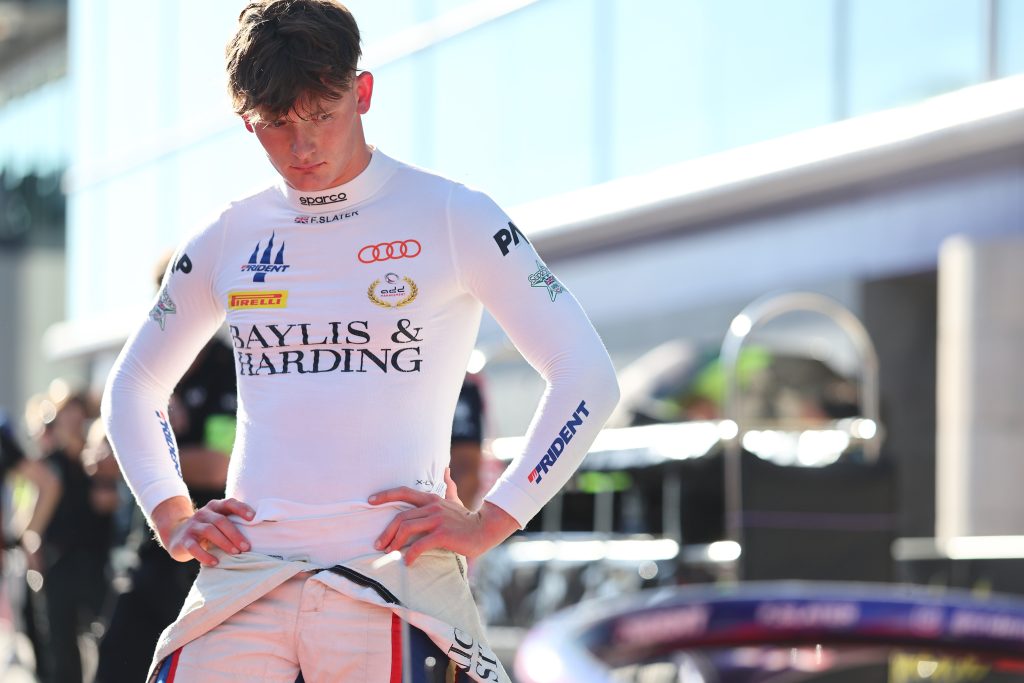
Ugochukwu kept applying pressure through Saturday. Fourth place in Feature Race 1 brought him level with Slater on 141 points. Crucially, Ugochukwu held the championship advantage on countback because of his greater number of victories. Campos also sealed the Teams’ Championship that afternoon.
Sunday then became a simple title fight under maximum pressure. Tuukka Taponen controlled the race from pole, but Ugochukwu did exactly what he needed behind him. Second place was enough to secure the 2026 Formula 3 Drivers’ Championship and complete a remarkable turnaround across the Madrid weekend.
It also gave the Madring debut a piece of history that went beyond the circuit itself. Madrid may have struggled to produce overtaking, but it still provided the stage where Ugochukwu completed his strongest F3 campaign and became champion. His season had started with victory in Melbourne and included another win at Silverstone, before the title battle tightened dramatically in the second half of the year.
Formula 1 Confirmed the Weakness
The Grand Prix finally tested whether strategy could compensate for limited overtaking. It could not.
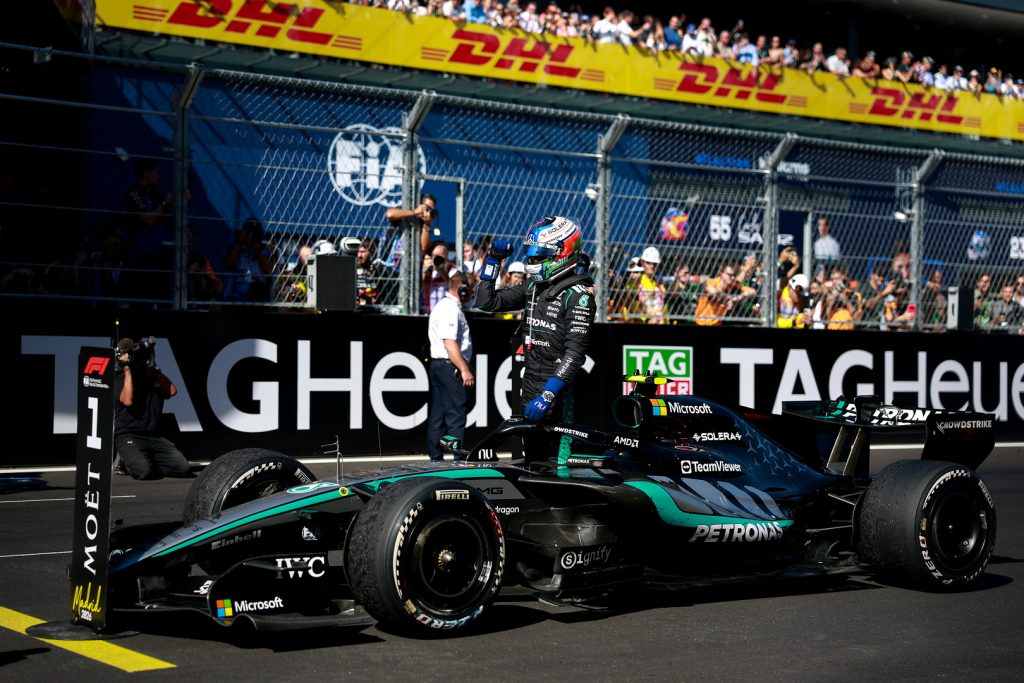
Norris controlled the opening phase from pole and appeared to have the race in hand. A Virtual Safety Car changed the order, while a seven second McLaren pit stop made the damage worse. Antonelli took the opportunity and won ahead of Verstappen and Norris.
The result changed. The racing barely did.
The Guardian recorded only four on track passes during the Grand Prix. Gabriel Bortoleto later called the race boring and pointed to an awkward truth. Even on poor tyres, he could keep a faster rival behind.
Strategy also faced an unusual barrier. Madring’s long pit lane created a loss of roughly 24 seconds, making extra stops less attractive. That reduced another possible source of variation. The contrast with qualifying was brutal. Saturday offered tiny margins and visible risk. Sunday relied on timing, pit stops and a neutralisation to move the leaders around.
Madrid produced a strategic twist without producing much wheel to wheel action. Antonelli became the first winner, but the circuit itself remained the bigger story.
The Event Worked Better Than the Racing
Operationally, Madrid has much more to build on. The venue went from construction project to Grand Prix host in only 15 months. Despite that timeline, organisers reached their target of around 350,000 weekend attendees.
The IFEMA location also gave Madring a major advantage. El País reported that the event featured the largest paddock in the championship. Spanish designers even supplied more than 50 pieces for the paddock, giving the new space a deliberate local identity.
Access proved another strength. The circuit sits close to the airport and links directly into Madrid’s public transport network. Around 115,000 spectators used the metro during the weekend.
Formula 3 had already helped test the operation. Its August running was designed partly to validate sporting, safety and operational procedures before the Grand Prix.
Still, the debut was not flawless. Fans criticised uncomfortable general admission areas and restrictions on outside food. Consumer group FACUA formally challenged the food and drink rules before the event. Organisers also installed water points and sunscreen dispensers as Madrid dealt with high temperatures.
Local opposition remained visible too. Neighbourhood groups protested over noise, mobility restrictions and the wider impact of the event.
For a first attempt, the machinery around the race worked. The product on the asphalt needs more attention.
Madring Has an Identity, Now It Needs Better Racing
The crowd gave Madrid scale immediately. Tickets sold out before the event, with international buyers accounting for 32 percent of sales. The La Monumental zone was designed around roughly 45,000 spectators, turning one corner into a stadium.
There was no shortage of profile either. The paddock drew major Spanish sporting names and international celebrities throughout the weekend. That helped Madrid feel like a destination event rather than a temporary experiment.
The home crowd did not get a fairytale result. Carlos Sainz retired, while Fernando Alonso finished 17th after the pair made contact during the Grand Prix.
Still, atmosphere was never the debut’s biggest concern. Accessibility worked, the grandstands filled, and Madrid showed it can stage an event at Formula 1 scale.
Racing quality remains the obvious weakness. F1 produced almost no passing. F2 repeatedly rewarded the start, while F3 showed the same pattern across three races.
The first weekend therefore deserves neither dismissal nor unconditional praise. Madring is difficult, distinctive and visually memorable. It also makes defending too easy once the field settles.
The strongest next step would be targeted, not cosmetic. Madrid needs a braking zone where following cars can attack without relying on mistakes or restarts. Otherwise, qualifying risks becoming the weekend’s main sporting attraction. There is plenty worth keeping. The challenge is turning a striking venue into a circuit that rewards more than track position.
Formula 1 returns in Baku on September 26, Formula 2 returns there from September 24 to 26, while Formula 3 will return in 2027 after Madrid closed its 2026 season.
Feature Image Credits: Audi F1 Media Centre