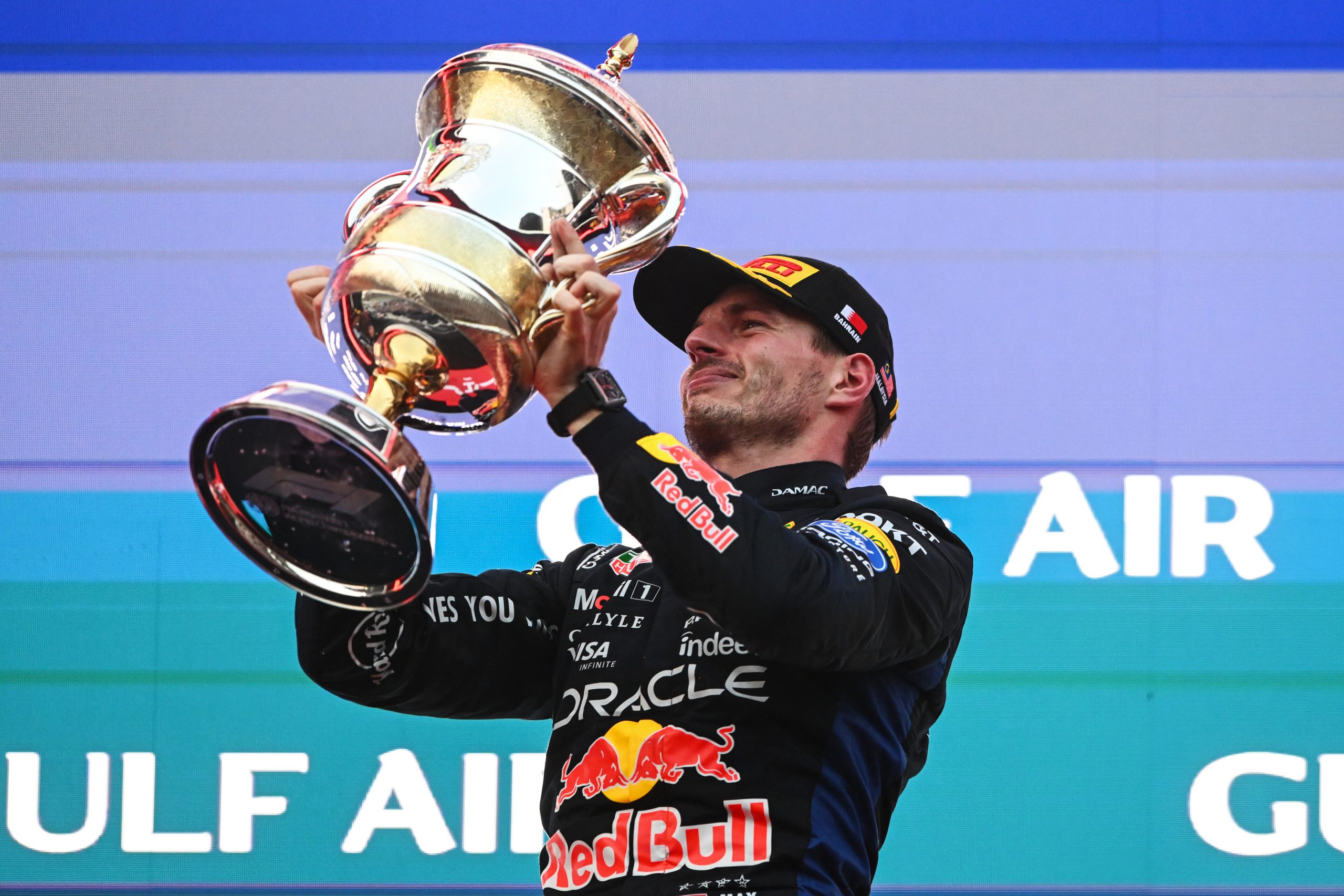
After nine years, Formula 1 returns to the Sepang International Circuit with a twist. This isn’t the Malaysian Grand Prix; it’s the 2026 Bahrain Grand Prix in Malaysia. Determined to keep its race title and commercial presence alive despite regional conflict, the Gulf state and the Malaysian government came to a highly unusual but brilliant compromise: Malaysia provides the circuit, and Bahrain provides the cash.
But this isn’t just a race to replace the original Bahrain Grand Prix on the F1 calendar. The collaboration extends beyond the event’s name. Authorities from Bahrain, Malaysia, and the FIA have come together to replicate the Bahrain Grand Prix at Sepang, going so far as to curate a Bahrain Village to showcase the nation’s cultural heritage, cuisine, and entertainment to motorsport fans in Asia.
While the weekend has concluded, the experience lives on. Having attended the race in person as a fan, I’ve put together the key takeaways you need to know from Round 16 of the F1 World Championship.
The Weather
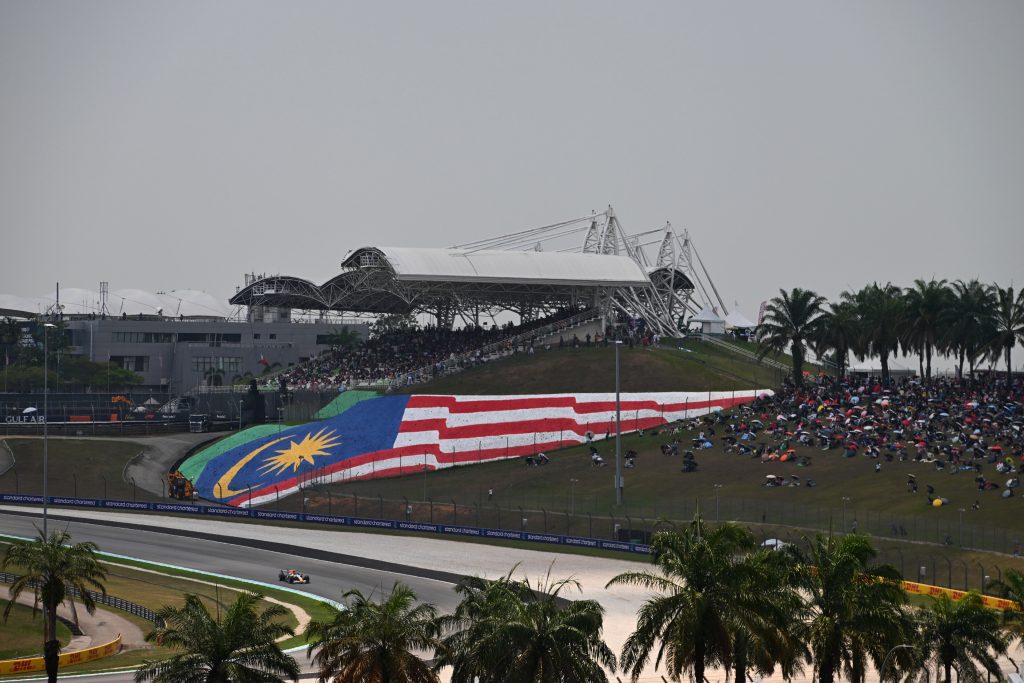
Leading up to the Bahrain Grand Prix in Malaysia, the country choked on transboundary haze driven by forest and peat fires in neighbouring Sumatra and Kalimantan. Exacerbated by severe El Niño dry conditions, the situation escalated until Kuala Lumpur and Singapore both ranked among the top five most polluted cities globally just days before the race.
To combat this, the Malaysian government conducted cloud seeding, triggering relentless downpours (particularly in the late afternoons) in the weeks prior to the event. Fortunately or unfortunately, the October inter-monsoon shift brought the rain and changed the wind direction to clear the haze.
As the race weekend began, ambient temperatures through Friday and Saturday hovered in the low 30s (°C), with track temperatures peaking at around 56°C during Free Practice 1. The real killer, however, was the extreme humidity. Even from the grandstands, you could feel the punishing effects if you were not adequately prepared.
Then came the rain. While forecasts predicted wet weather for Friday and Saturday, the skies finally opened on Sunday when a torrential downpour hit the track shortly before the scheduled start. The rain refused to let up even as the national anthem played, forcing Race Control to delay the race until conditions improved.
A Rare ‘Software Bug’
After torrential rain delayed the scheduled start by 40 minutes, the procedure was abandoned again when multiple cars crawled or ground to a halt on the formation laps. Post-race investigations revealed a software bug triggered the chaos.
As the FIA explained in an official statement: “Low-engine speed, low-grip conditions, wet weather energy management settings, and the Sepang Circuit’s sector configuration led to an unintended loss of power for a number of cars.”
These conditions caused a system bug to trigger a feature called “continuous offset”, a 60-second emergency lockdown designed to stop teams from deliberately shutting down the MGU-K to exploit loopholes. This lockdown knocked out the internal combustion engine power entirely.
As an emergency measure, the FIA released a software update during the delay. The patch removed the 250kW restraint in those sectors, ensuring the cars had enough MGU-K power to keep running at low speeds without triggering the total shutdown.
Following the race, the FIA issued an official statement. In a post-race interview, FIA single-seater director Nikolas Tombazis explained why they failed to catch the issue before the Bahrain Grand Prix in Malaysia:
“We didn’t manage to test the software as extensively as we would have liked, because there’s been very little wet running this year. There was a bit of a combination of circumstances which caused this bug to kick in.
Basically, [on] the formation lap, some cars went very slowly, almost came to a standstill. There was a bit of a concertina effect between cars, and some cars almost stopped completely. That bug prevented the power from being redeployed, and for the cars to start again. I think if we had had a bit more testing, we probably would have managed to catch it in time, and not have such a situation.
Once the problem happened, our guys realised very quickly what was happening, and had to work under a lot of time pressure for an update to the software, which was issued to the teams, and the teams had to install it on their cars.” — FIA single-seater director Nikolas Tombazis
Du Du Du, Max Verstappen
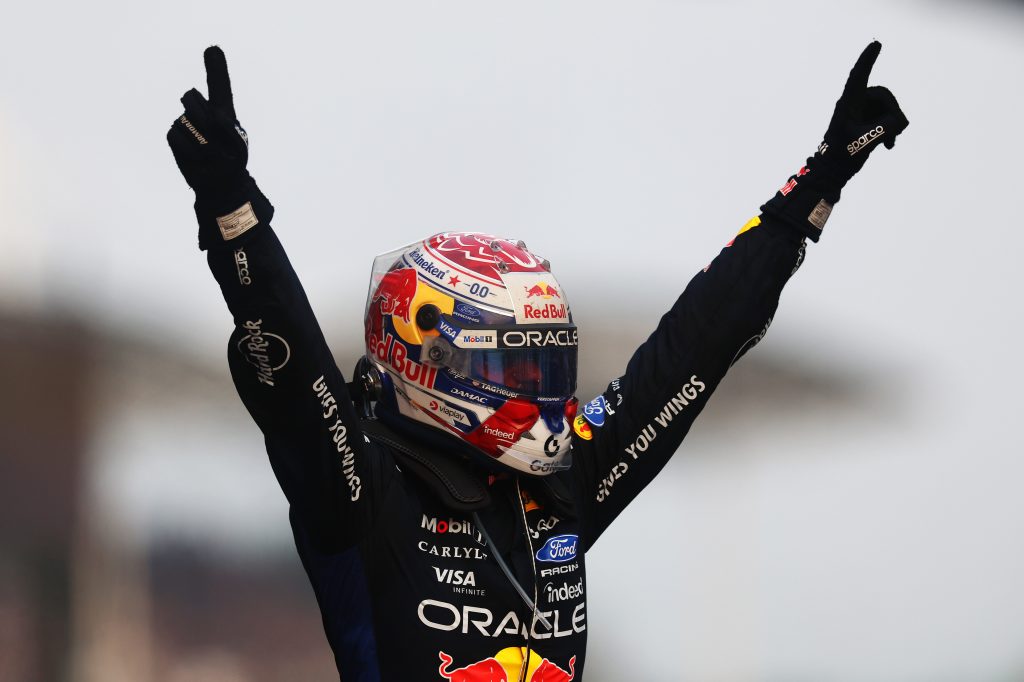
Red Bull and Max Verstappen achieved a major milestone at the Sepang International Circuit, securing their first pole and victory of the 2026 season to end a drought dating back to the 2025 Abu Dhabi Grand Prix. The weekend also marked a historic first for Red Bull Ford Powertrains, claiming their maiden pole and victory as an engine supplier.
Surprisingly, Red Bull’s recent upgrades in Baku were what finally fixed the RB22’s balance, but it was in Sepang where their full impact was felt. The new floor geometry, diffuser, sidepods, and other adjustments smoothed out the car’s through-corner balance and expanded its operating window. Crucially, the RB22 kept its tyres alive longer, while the power unit cemented Red Bull’s dominance down the long straights.
Although Verstappen initially lost the lead to both Mercedes drivers, Red Bull nailed the crossover timing by pitting him for Softs. That gave him a massive tyre advantage on the restart, allowing him to breeze past George Russell and Kimi Antonelli on their Mediums. From there, he comfortably extended his lead and charged to victory.
Teammate Isack Hadjar lost out on a potential podium after a late-race Safety Car bunched up the pack. Having spent much of the Grand Prix climbing the field to run a lonely fourth, he was compromised by a battery issue in the closing laps and was ultimately passed first by Lewis Hamilton, then by Charles Leclerc.
Reliability Issues Strikes Back For Mercedes
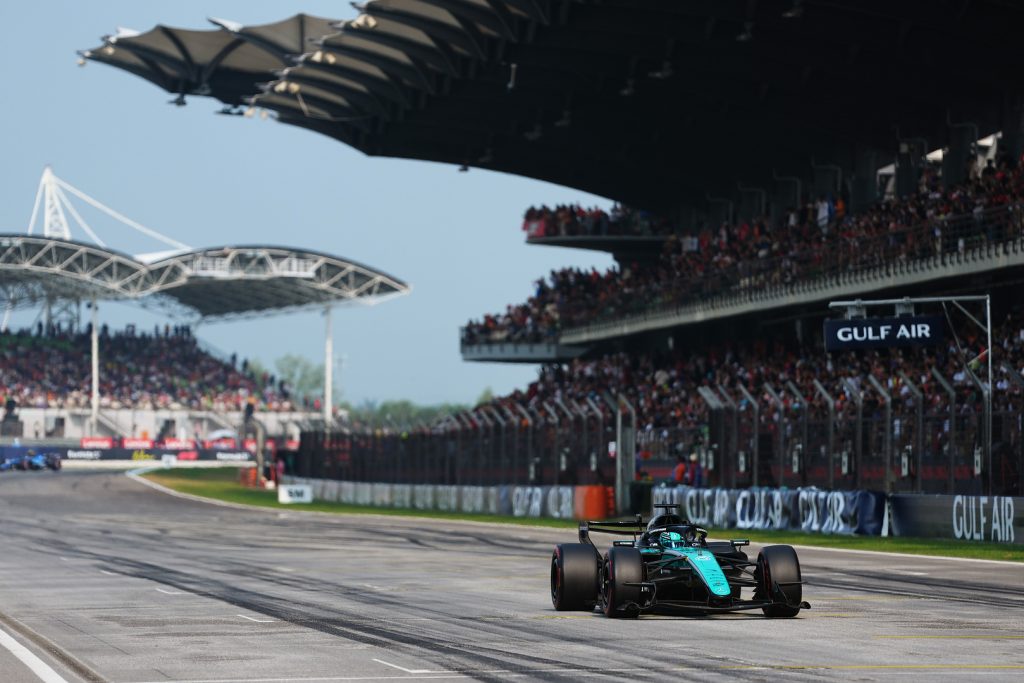
Compared to their rivals, Mercedes took a more systematic approach to upgrading the W17. In Sepang, they introduced a substantial seven-part aerodynamic package — their first major update since the Canadian Grand Prix in May.
The package aimed to improve medium-to-high-speed downforce, an area where the car had steadily fallen behind in recent races. These changes, however, saddled the W17 with heavy drag on the straights and understeer in low-speed corners, an issue the team suspects was worsened by Sepang’s highly abrasive surface.
Still, both Mercedes drivers looked on course to secure a double podium in what serves as a home race for title partner Petronas. Unfortunately, a suspected power unit issue forced George Russell to retire on Lap 50, marking his third non-finish of the 2026 season.
With his teammate and championship rival Kimi Antonelli finishing second, Russell’s DNF extends the Italian’s championship lead to 84 points. Facing a grid penalty in Singapore, and potentially another as the team prepares its next ADUO engine upgrade, the Briton’s chances of securing the driver’s title are rapidly dwindling.
A Historic Return To An Iconic Circuit
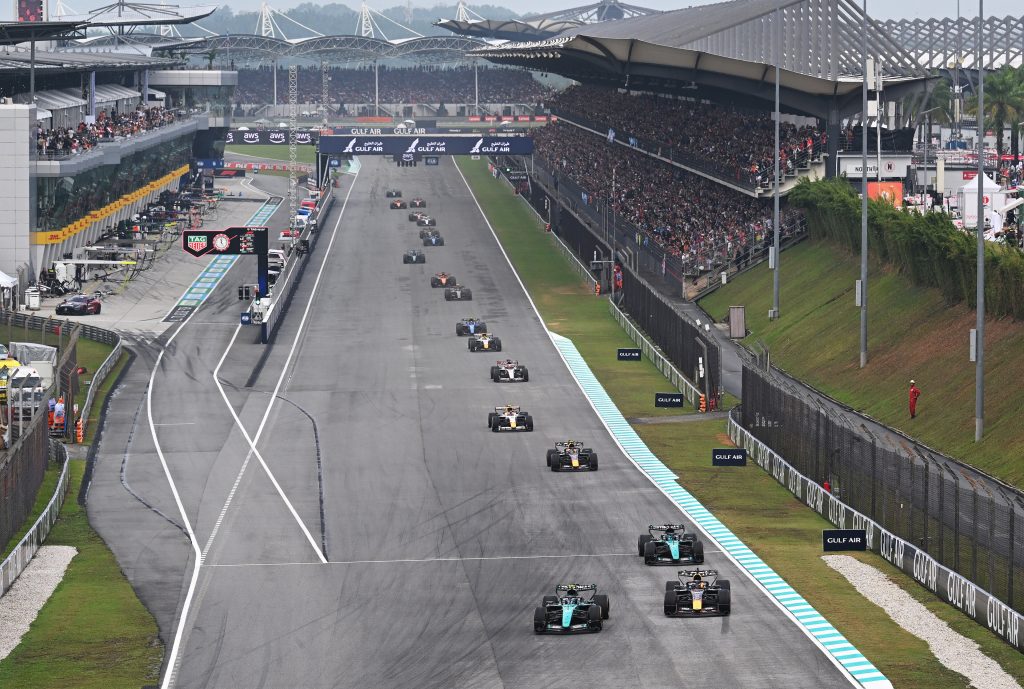
Sepang is a great reminder of why it remains so beloved by drivers and the community. The three-day event drew a massive 261,000 spectators, setting a new attendance record for the circuit. This turnout comfortably shattered the previous record of 126,690 from the 2008 Malaysian Grand Prix, with 103,000 fans packing the stands for Sunday’s race alone.
With success like this, the elephant in the room is whether Sepang could make a permanent return to the F1 calendar. On X, Prime Minister Datuk Seri Anwar Ibrahim confirmed he met with F1 CEO Stefano Domenicali to discuss exactly that:
“We discussed the prospects of reinstating the Malaysia Grand Prix permanently in the Formula 1 calendar, thereby fulfilling the long-standing desire of fans who have eagerly awaited its return to Sepang.
However, this effort will require time because arranging the race calendar must take into account the packed schedule as well as existing contractual commitments with host countries.
Insya-Allah, this matter will be discussed with the Cabinet to examine the appropriate space and direction, taking into consideration the country’s capabilities as well as its benefits to the economy and the people.” — Prime Minister Datuk Seri Anwar Ibrahim
The Bahrain Grand Prix in Malaysia wasn’t without its issues — mainly the logistical nightmare of fans entering and exiting the circuit throughout the weekend. Still, we cannot forget that Bahrain and Malaysia had barely two months to pull this event together.
As someone experiencing their first race weekend, nothing beats the feeling of sitting in the Grandstand, exploring the Bahrain Village, and hearing the roar of the cars flying by. It was brilliant to finally experience the magic of Sepang in person and we are counting down the days until F1 returns once again to this iconic venue.
*
Formula 1 returns from October 9th to October 11th for the Singapore Grand Prix in Singapore.
Featured Image: Red Bull Content Pool/Getty Images