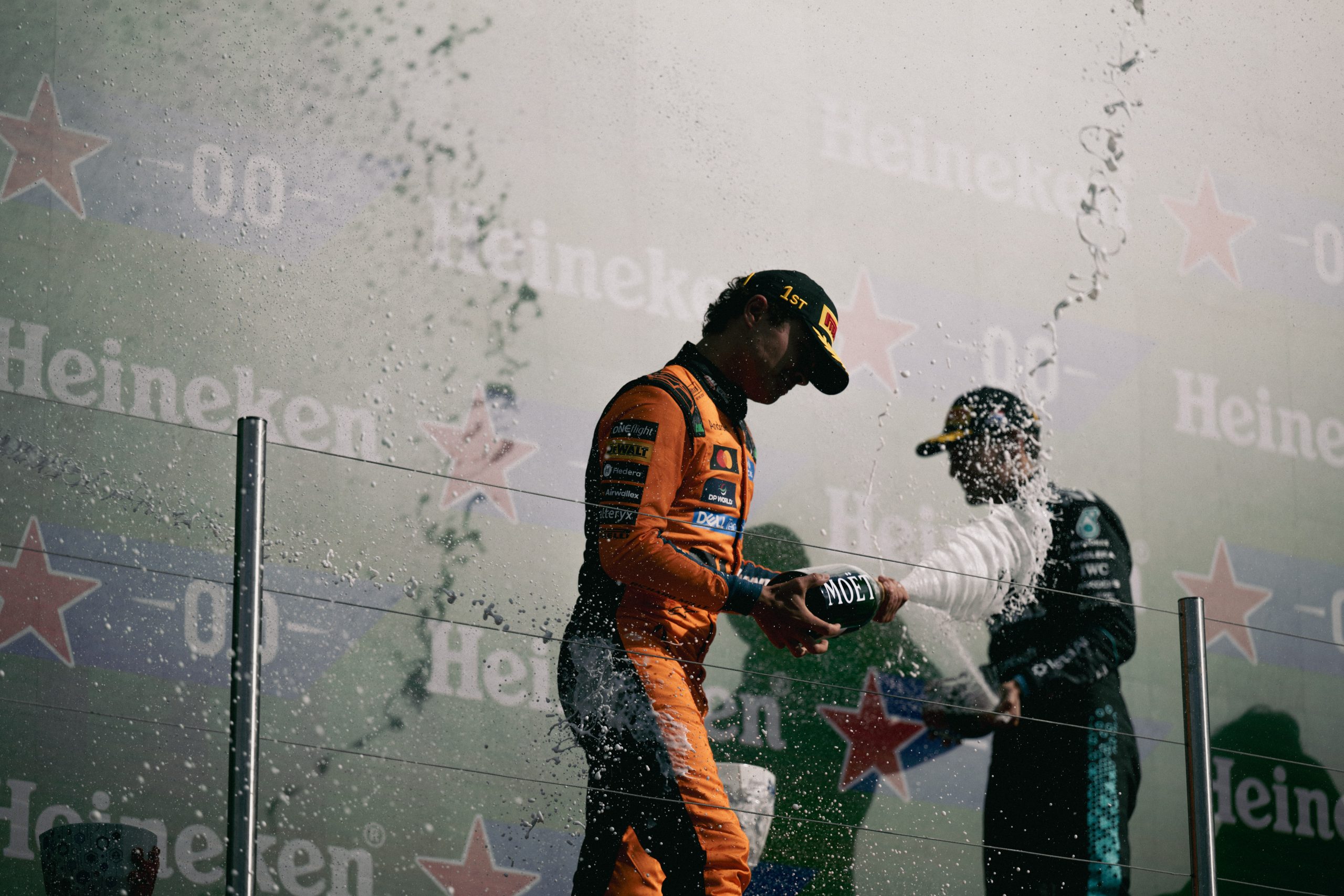
Formula 1 at Zandvoort returned from the summer break with a weekend that changed tone almost by the hour. George Russell ruled the Sprint, Lando Norris answered with pole and victory, while Max Verstappen suffered a brutal end to his final home Grand Prix.
Behind those headlines, the Dutch weekend offered something even more important. McLaren now looks capable of challenging Mercedes on outright pace. Oscar Piastri is heading in the opposite direction, and Liam Lawson turned an emergency call into one of his strongest performances of the season. All of it unfolded during Zandvoort’s final Formula 1 weekend for the foreseeable future.
A Sprint Weekend Starts on a Knife Edge
Only one practice session gave the teams little time to understand changing conditions. The track started damp before slick tyres quickly became the better option. Kimi Antonelli immediately looked comfortable and eventually topped the session with a 1:12.949. Norris finished just 0.121 seconds behind, while Russell sat another four thousandths back.
Antonelli’s pace came despite a spin at Turn 10. Lewis Hamilton and Charles Leclerc also spent time at the top of the order. Ferrari therefore looked threatening from the start. Max Verstappen had a much less convincing hour and finished only 11th. Carlos Sainz endured an even worse session after two excursions damaged the floor of his Williams.
Sprint Qualifying then compressed the leading group even further. Russell produced a 1:11.567 to secure pole. Norris missed out by only 0.041 seconds. Leclerc finished another 0.014 behind, while Piastri completed a top four separated by less than a tenth.
The first surprise came from the shape of that battle. Mercedes still had speed, but McLaren and Ferrari could challenge it immediately. Formula 1 at Zandvoort had started with three teams separated by almost nothing. Verstappen managed only sixth. Liam Lawson, returning to Red Bull as a substitute for the injured Isack Hadjar, narrowly missed SQ3 in 11th. His real breakthrough would come later.
Russell Controls the Sprint as Leclerc Rolls the Dice
Russell made Saturday morning look simple. He launched cleanly from pole and controlled the 24 lap Sprint from the front. His advantage changed throughout the race, but nobody managed to put him under sustained pressure. It became his third Sprint victory from pole.
The more interesting story developed behind him. Ferrari sent Leclerc out on soft tyres while almost everyone else chose mediums. Only Ollie Bearman made the same call. On a circuit where passing remains difficult, Ferrari gambled on extra grip and trusted Leclerc to protect the tyres.
It worked.
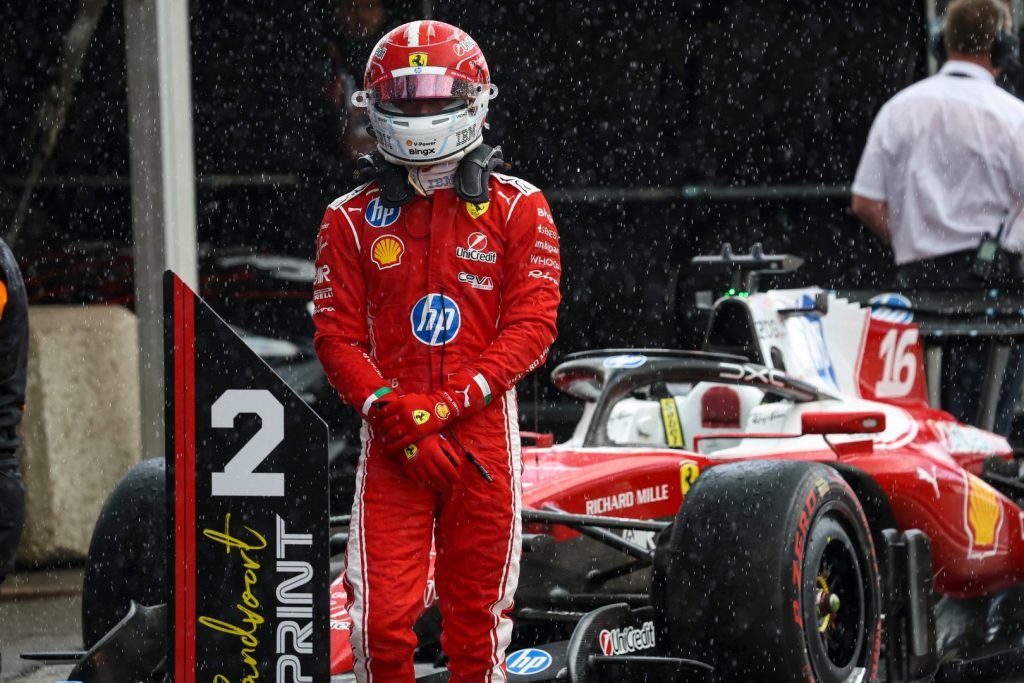
Charles Leclerc after he won second place at Spint race at Zandvoort; Photo Credit: Scuderia Ferrari
Leclerc caught Norris and passed him on Lap 18 to claim second. The Ferrari driver kept the soft tyres alive until the finish and crossed the line only 1.360 seconds behind Russell. That gamble became one of the smartest tactical calls of the weekend.
Norris had started second but developed rear grip problems as his mediums faded. Antonelli closed rapidly in the final laps, yet Norris held third by only 0.385 seconds. Piastri finished fifth after losing a place to Antonelli at the start. Verstappen followed in sixth.
Saturday morning therefore seemed to favour Mercedes. Russell looked untouchable and Antonelli had strong race pace in traffic. McLaren had speed, but tyre management suddenly looked like a weakness. A few hours later, the picture changed again.
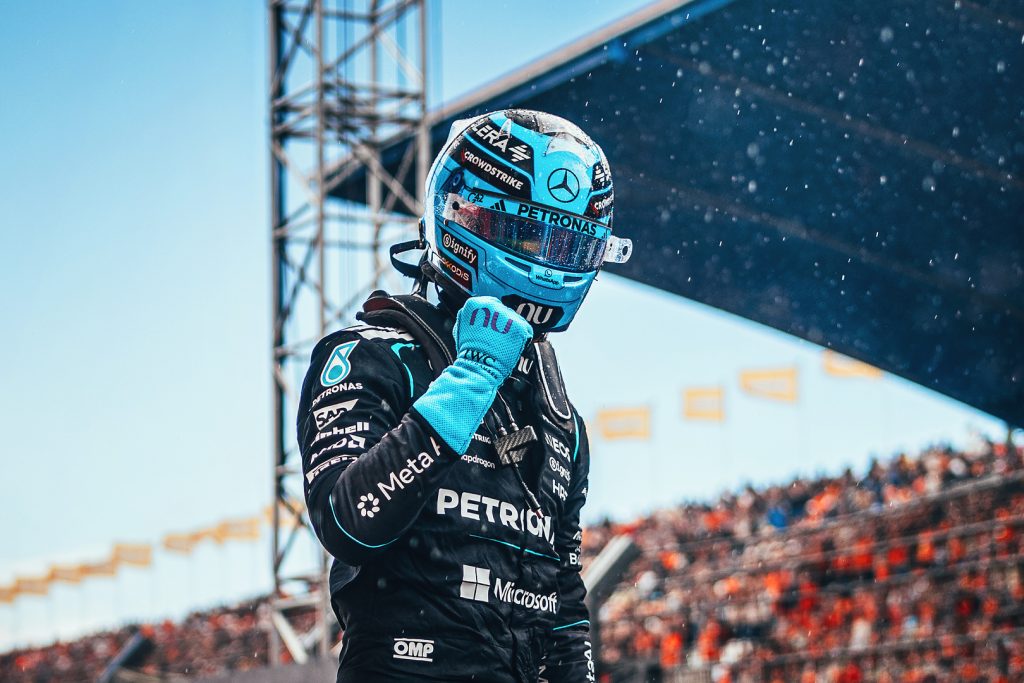
Norris Finds the Lap That Changes Saturday
Rain threatened the final minutes of Q3, which forced the leading drivers to make difficult calls on preparation and track position. Piastri had looked particularly quick earlier in the session. Russell also seemed capable of completing a perfect Saturday.
Norris instead delivered when the pressure peaked. He committed to one final attempt and produced a 1:11.163. That put him 0.102 seconds ahead of Russell and gave McLaren its second consecutive Grand Prix pole after Hungary.
Antonelli took third, only 0.031 seconds behind Russell. Piastri settled for fourth after failing to reproduce his earlier pace when it mattered most. Hamilton and Leclerc filled the third row for Ferrari.
Further back, Verstappen could extract only seventh from the Red Bull. That result carried extra weight at his home circuit. Lawson then produced one of Saturday’s biggest surprises by qualifying eighth, barely more than a tenth away from Verstappen despite stepping into the car at short notice.
Norris later explained that he had taken more risk on his final attempt. It showed. The lap looked aggressive rather than conservative, which mattered after McLaren’s weaker Sprint performance. Formula 1 at Zandvoort had suddenly moved back towards the reigning World Champion.
Norris Turns Pace Into a Real Warning
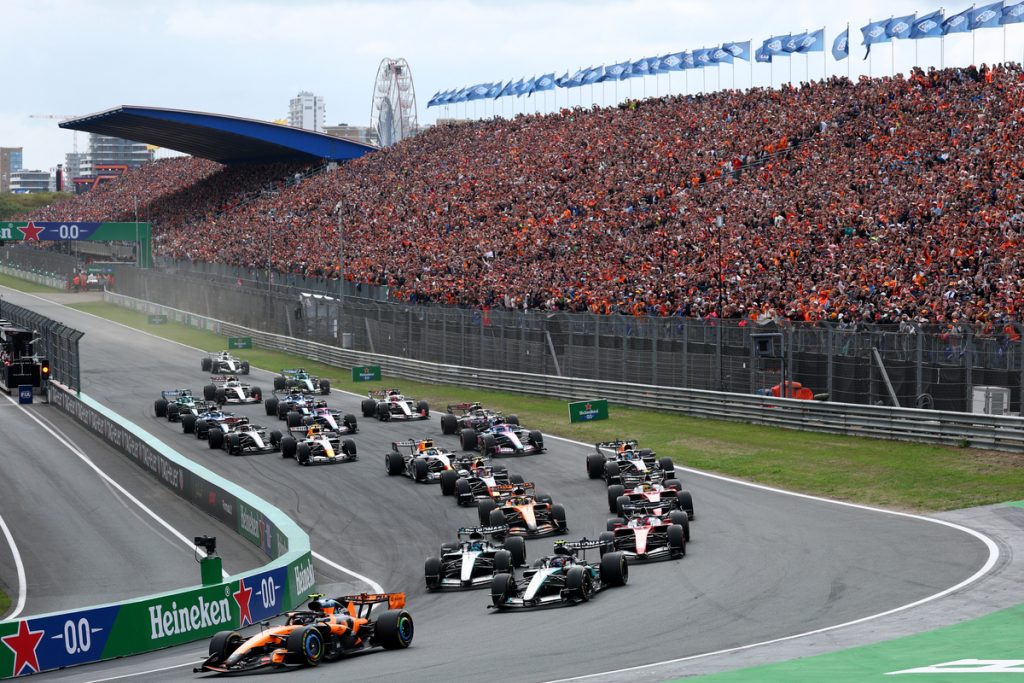
Sunday began with rain and uncertainty. The circuit remained damp in places, but most drivers eventually chose slick tyres. Norris held the lead at the first start while Antonelli jumped Russell for second. Leclerc also gained two places and moved into fourth.
Then the weekend changed completely.
Verstappen lost the rear of his Red Bull after the opening lap and hit the barriers hard near the final banking. Race control stopped the Grand Prix. The Dutchman climbed out unharmed, but his final home race had ended almost immediately.
At the restart, Antonelli attacked. He beat Norris into Turn 1 and took the lead. For a while, the championship leader appeared capable of controlling the race. Norris gradually closed the gap as the balance shifted through the next stints.
The decisive move came when Norris reclaimed first place. A later Virtual Safety Car then offered Antonelli another chance. Mercedes fitted fresh tyres to the Italian, while Norris stayed out. Russell eventually moved aside to release his teammate. Even with newer rubber, Antonelli could not close the gap.
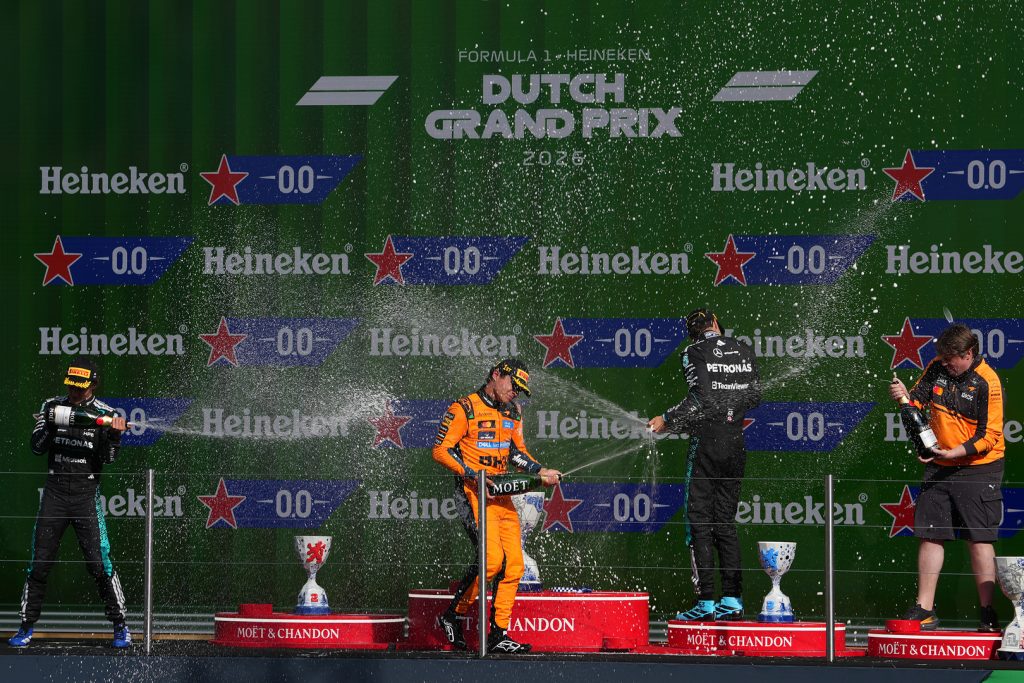
Norris won by 11.536 seconds. Antonelli finished second, Russell third, Hamilton fourth and Leclerc fifth. It gave Norris consecutive victories after Hungary and delivered McLaren a third straight Dutch Grand Prix win after Norris in 2024 and Piastri in 2025.
More importantly, Formula 1 at Zandvoort confirmed that McLaren’s progress is real. Antonelli said after the weekend that Mercedes no longer has the fastest car, highlighting McLaren’s improvement since its Hungary upgrade. Norris remains 83 points behind him, but the performance trend now looks very different from the opening part of the year.
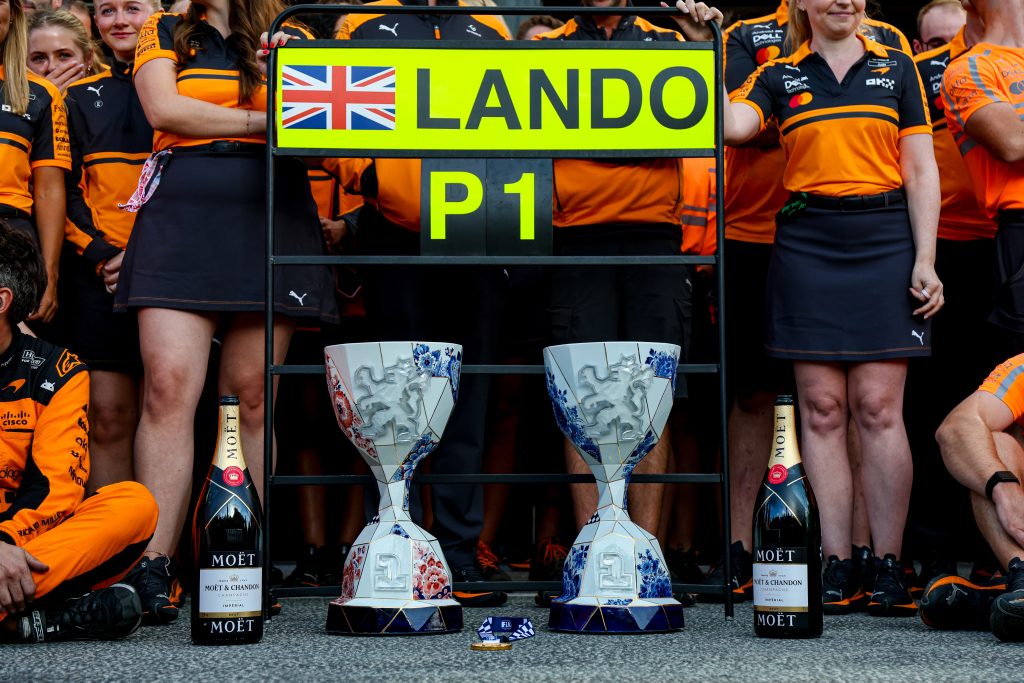
Antonelli Protects the Lead as Russell Pushes Back
Mercedes still left Zandvoort with the biggest combined haul among the leading teams. That matters.
Antonelli did not produce his cleanest weekend. He spun in practice and made mistakes during the qualifying sessions. After the Sprint, he called the weekend a useful wake up call. The Italian had won five consecutive Grands Prix earlier in the season, but only one of the next five before Zandvoort.
His response on Sunday showed why the championship remains firmly in his control. Antonelli beat Russell at the start, then passed Norris at the restart. He could not match McLaren later, but second place still increased his championship advantage.
Antonelli now leads with 242 points. Russell and Hamilton sit level on 183, which leaves both 59 points behind. Norris has moved to 159, while Leclerc follows on 155.
Russell also needed a strong weekend. His season had become increasingly defined by missed opportunities, reliability concerns and Antonelli’s rapid rise. Zandvoort finally gave him some momentum. Sprint pole became Sprint victory, then he added second in Grand Prix Qualifying and third on Sunday.
Mercedes therefore faces an unusual situation. Its championship leader remains comfortable, yet its performance advantage appears smaller. McLaren has now won consecutive Grands Prix, while Ferrari stayed close enough to pressure Russell throughout Sunday’s closing stages.
Red Bull’s Farewell Becomes a Tale of Two Drivers
Few weekends could have produced a harsher contrast for Red Bull.
Before Formula 1 at Zandvoort even started, Verstappen committed his future to the team through the end of 2030. The announcement removed months of speculation and gave his home weekend an immediate emotional lift.
The car never followed the script. Verstappen finished only 11th in practice. Sixth in Sprint Qualifying became sixth in the Sprint. Grand Prix Qualifying brought seventh, with Verstappen admitting that he had reached the limits of what the car could offer.
Sunday then ended before he had completed a racing lap. Damp conditions remained around the final banking, where Verstappen lost control and hit the wall. Red Bull described the weekend as difficult even before the accident.
Lawson provided the unexpected positive.
Hadjar missed the event after suffering a wrist injury during the summer break. Red Bull promoted Lawson from Racing Bulls, while Yuki Tsunoda temporarily took Lawson’s place. It marked Lawson’s first return to Red Bull since his short spell with the senior team in early 2025.
He improved throughout the weekend. After taking 11th in Sprint Qualifying and the Sprint, Lawson qualified eighth beside Verstappen. He then finished seventh on Sunday despite receiving a ten second penalty for a yellow flag infringement.
For a driver handed the opportunity only days earlier, that represented a serious statement.
The Bigger Picture
Zandvoort delivered one final weekend worthy of the circuit’s reputation. Russell owned the Sprint. Leclerc made an aggressive tyre gamble work. Norris produced the decisive Qualifying lap and then won a Grand Prix that demanded patience, speed and two major overtakes.
Mercedes still leads the Teams’ Championship with 425 points. Ferrari follows on 338, while McLaren has climbed to 263. Yet those numbers no longer tell the whole performance story. McLaren’s recent upgrade has changed the competitive order enough for Mercedes itself to acknowledge the threat.
Norris now has momentum. Russell looks rejuvenated. Antonelli still holds a commanding championship advantage, but his margin no longer guarantees control of every weekend. Piastri needs answers, while Red Bull must understand why Verstappen remained so limited at one of his strongest circuits.
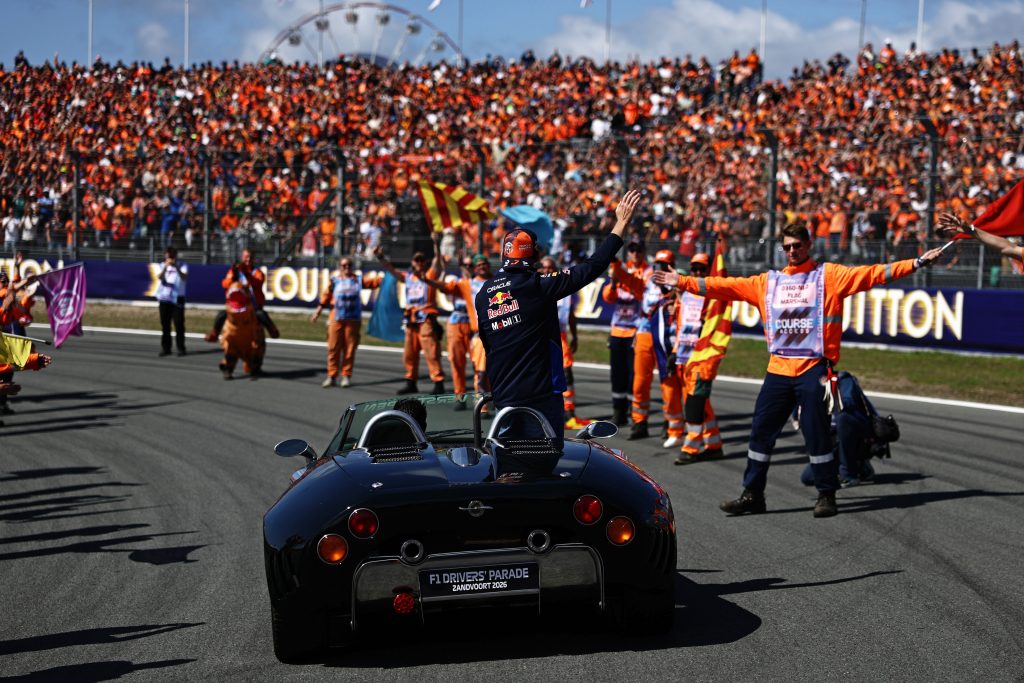
There was also a sense of finality. Zandvoort returned to Formula 1 in 2021 after a long absence, but the promoter chose not to continue beyond 2026. The final Dutch Grand Prix therefore closed a six year modern chapter for the circuit and its extraordinary home crowd.
Formula 1 at Zandvoort ended with Norris on top, but the bigger message came from behind him. The second half of the season looks far less predictable than the first.
Formula 1 will return from September 4 to September 6 for the Italian Grand Prix at Monza.
Feature Image Credit: McLaren