After a forced April break, the Miami Grand Prix reopened the season with fresh variables everywhere. Bahrain and Saudi Arabia had dropped off the calendar, the FIA approved energy management refinements for Miami, and nearly every serious team arrived with new parts.
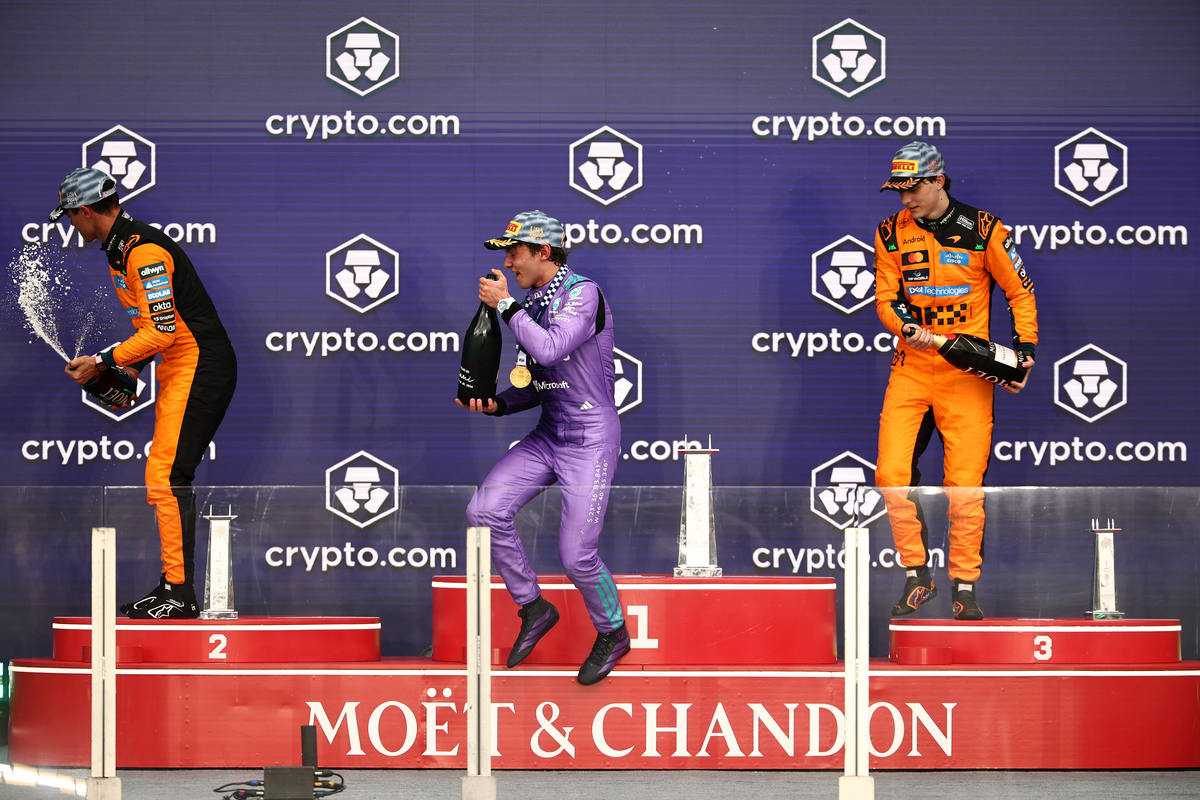
Through all that noise, the result still sounded familiar. Kimi Antonelli took pole, survived a disorderly opening phase, and beat Lando Norris and Oscar Piastri to a third straight win. Yet the wider story of the Miami Grand Prix lived beyond one driver and one podium.
Antonelli still sets the standard
Miami did not give Antonelli a clean Sunday. It gave him a champion’s kind of Sunday. He started from pole, ran wide in the first corner fight with Max Verstappen and Charles Leclerc, and lost the lead.
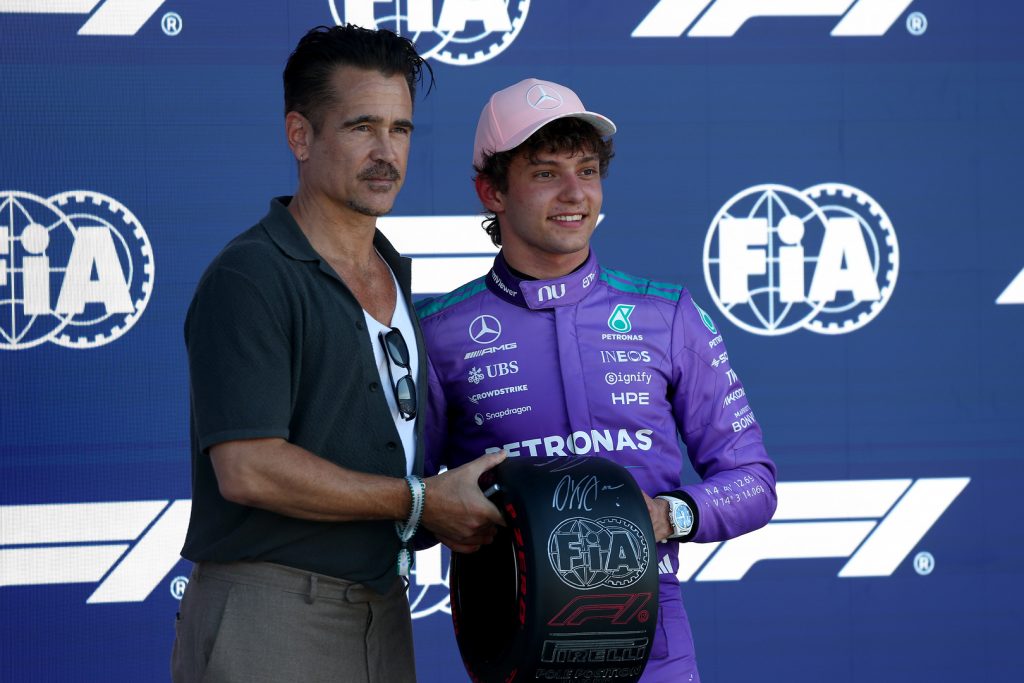
Later, once the pit sequence played out, Antonelli emerged ahead of Norris and controlled the race from there. That recovery mattered because his weekend had already bent once. Antonelli lost ground in the Sprint, crossed the line fourth, and then dropped to sixth after a time penalty for repeated track limits. A few hours later, he rebuilt the story with a third straight Grand Prix pole. He admitted Saturday had opened badly, but he still finished the day on top.
Sunday completed the pattern. Antonelli scored a third straight victory and stretched his lead to 20 points after four rounds. He also became the first driver to win the Miami Grand Prix from a front row start, which felt symbolic on a circuit where strange race flow had often mattered more than grid position. Mercedes still lead the season, but Antonelli increasingly looks like the driver who defines it.
The Miami Grand Prix became the first real test of the fixes
The Miami Grand Prix also served as the first live test of Formula 1’s emergency refinements. After reviewing data from Australia, China and Japan, stakeholders agreed to reduce maximum recharge in qualifying from 8MJ to 7MJ, increase peak superclip power from 250 kW to 350 kW, and cap race boost at an extra 150 kW to reduce sudden performance swings. Officials also trialled race start safety measures in Miami after early season concerns around starts and closing speeds.
Drivers did not pretend those changes would solve everything. Piastri called them “a step in the right direction”. Carlos Sainz said no magic bullet would appear overnight. Nico Hulkenberg also stressed that teams still needed real track data, not just simulator confidence. Miami therefore felt less like a solution and more like the sport’s first meaningful checkpoint.
The first signs still mattered. Officials extended practice because of the new rules, the Sprint format, and the month without racing. McLaren then broke Mercedes’ perfect run in qualifying by taking Sprint pole, and Grand Prix qualifying placed Antonelli, Verstappen, Leclerc and Norris in the first four positions. The field did not flatten overnight, but it did look less fixed than it had in March.
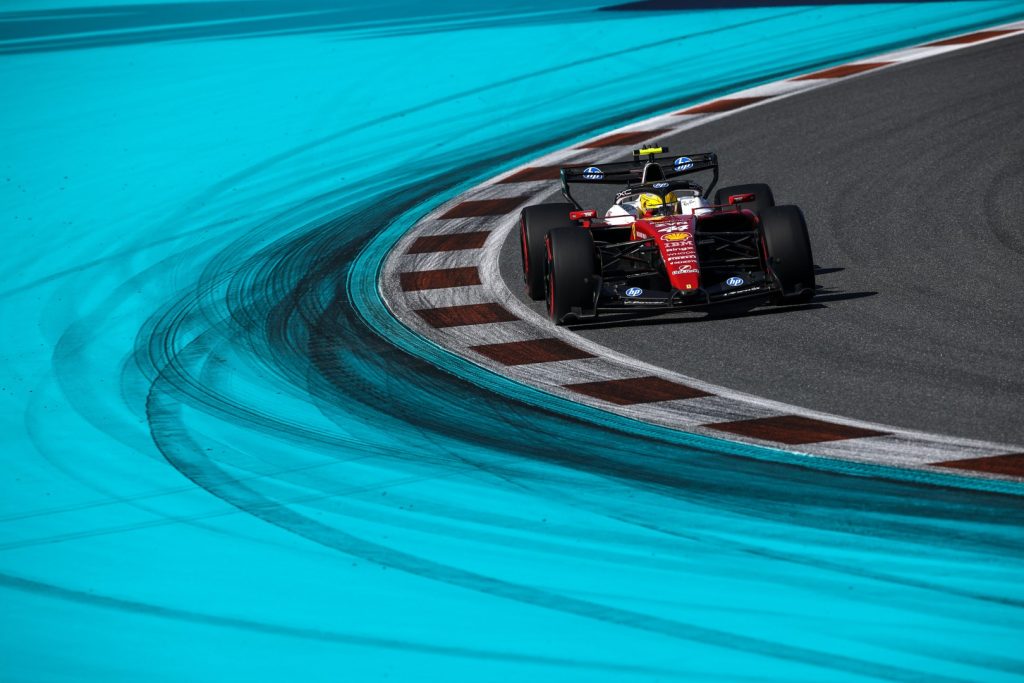
Hamilton with upgraded Ferrari car on track; Photo Credit: Scuderia Ferrari
Upgrades moved the field, not the winner
Ferrari and Red Bull left Miami with different versions of encouragement. Ferrari topped the only practice session through Leclerc, took third in the Sprint, and started Sunday from third after bringing what Leclerc called a significant package. He even grabbed the lead at the start, which briefly made Miami look like Ferrari’s strongest opening phase of the year.
Then the weekend slipped away. Piastri passed Leclerc on the last lap, Leclerc spun, and Ferrari fell to sixth and seventh with Lewis Hamilton one place behind his team mate. Leclerc received a 20 second penalty for repeatedly leaving the track and gaining an advantage on the final lap of the Miami Grand Prix, dropping from sixth to eighth. Stewards ruled that his mechanical issue did not justify cutting multiple chicanes, promoting Hamilton and Colapinto in the final classification. The points still mattered. The message mattered more. Ferrari’s upgrades brought the car back into the fight, but not into control, and Miami exposed that difference.
A Similar Tale at Red Bull
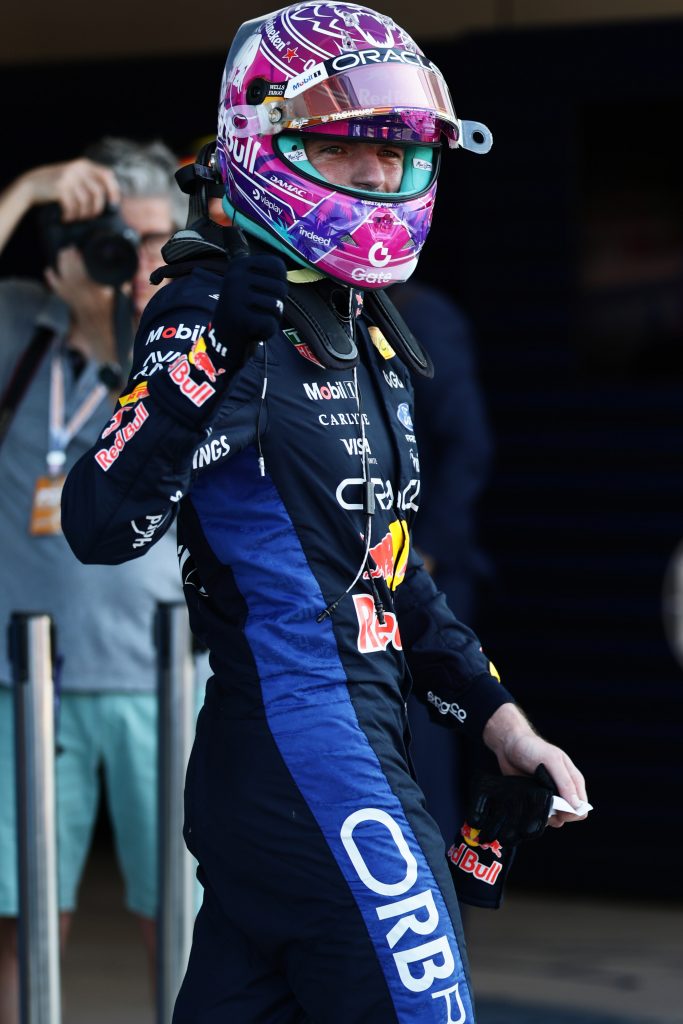
Red Bull told a sharper story. Verstappen said the team’s work made him feel more in control again and that he no longer felt like “a passenger” in the car. He backed that up with second on the grid. But the race turned into damage limitation after contact with Leclerc spun him down the order at the first corner, leaving him to recover to fifth instead of fight for the win. Verstappen also received a five second penalty for crossing the white line at pit exit, though it did not change his final result.
The other side of the garage looked worse. Stewards disqualified Isack Hadjar from qualifying after his floorboard exceeded the permitted volume, and parc ferme changes then sent him from the back to a pit lane start. Five laps later, he hit the wall and ended a weekend that never gave him a stable base. For Red Bull, Miami offered hope through Verstappen and waste through everything else.
Miami punished every small error
The weekend never settled into a calm rhythm. Early storms and lightning forced officials to move the race start to 1 p.m. local time, while support events fell away to protect the window for the Grand Prix itself. By lights out the rain had cleared, but the first phase still carried the urgency of a race that knew weather might return.
That tension showed almost immediately. Hadjar crashed on lap five. Moments later, Pierre Gasly and Liam Lawson collided, and the Alpine flipped onto the barrier in one of the season’s most striking images so far. Gasly climbed out on his own. Lawson later said he had lost the gearbox just before contact.
Even the leaders raced like they expected another complication. The opening 25 laps felt rushed, tense, and shaped by the possibility that rain could return at any moment. That made the Miami Grand Prix more than a normal fourth round. It became a stress test for cars, procedures and drivers who already operate on a tight technical margin under the 2026 rules.
The midfield picture starts to shift
Beyond the usual headline battles, the Miami Grand Prix offered a revealing snapshot of the grid’s evolving hierarchy, where progress was measured just as much in resilience as in outright pace.
Williams delivered one of the quiet success stories of the weekend, placing both cars inside the points for the first time this season. It may not shake the championship order, but it signals a level of operational consistency that had been missing. Clean execution, solid strategy calls, and a car that behaved predictably across sessions allowed them to capitalise on others’ mistakes. For a team rebuilding its identity, that matters.
In contrast, Aston Martin arrived in Miami as the only outfit without a single upgrade. That decision stood out even more given their difficult start to the season.
Meanwhile, Cadillac took a more ambitious route by introducing its first significant upgrade package. The changes were not transformative overnight, but they hinted at a clearer development direction. Incremental gains in balance and efficiency suggested that the groundwork is finally taking shape.
One of the standout individual performances came from Franco Colapinto, whose composed and confident showing marked him as one of the weekend’s most impressive drivers. In a midfield that often punishes inexperience, he looked assured, opportunistic, and increasingly comfortable at this level.
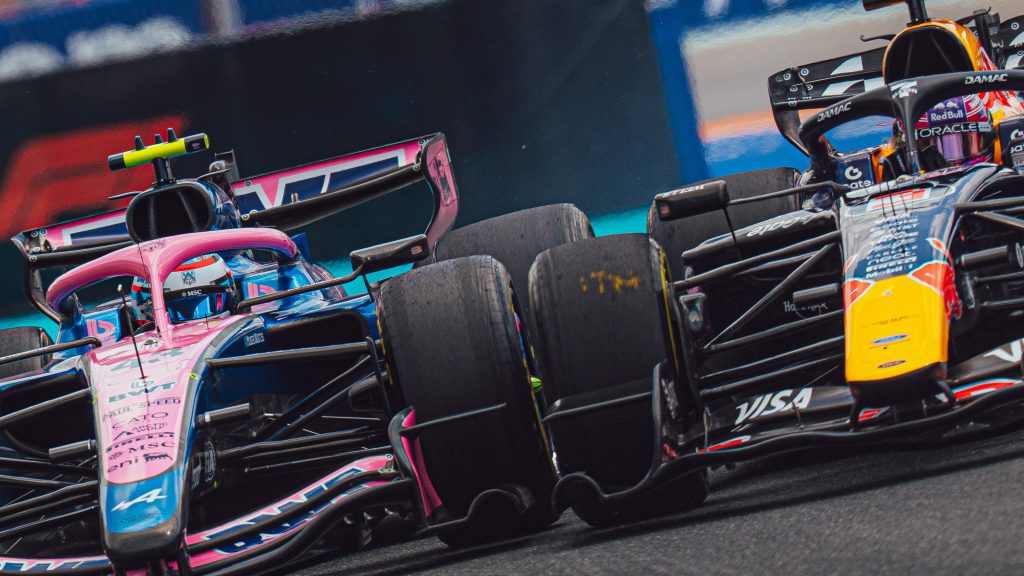
Franco Colapinto and Max Verstappen in duel; Photo Credit: Alpine F1 Team
Final thoughts
The clean reading says Antonelli won again and Mercedes still own the season’s central line. That reading is correct. He now has three straight wins, three straight Grand Prix poles, and a 20 point lead. Every time a weekend changes shape, he seems to find the exit first.
The more interesting reading lives underneath. The Miami Grand Prix gave McLaren real traction, gave Ferrari and Red Bull evidence that development still matters, and gave the revised energy rules their first public examination. None of that removed Mercedes from the front. But it did make the front less lonely.
Formula 1 will be back May 22nd in Montreal, Canada.
Feature Image Credit: McLaren