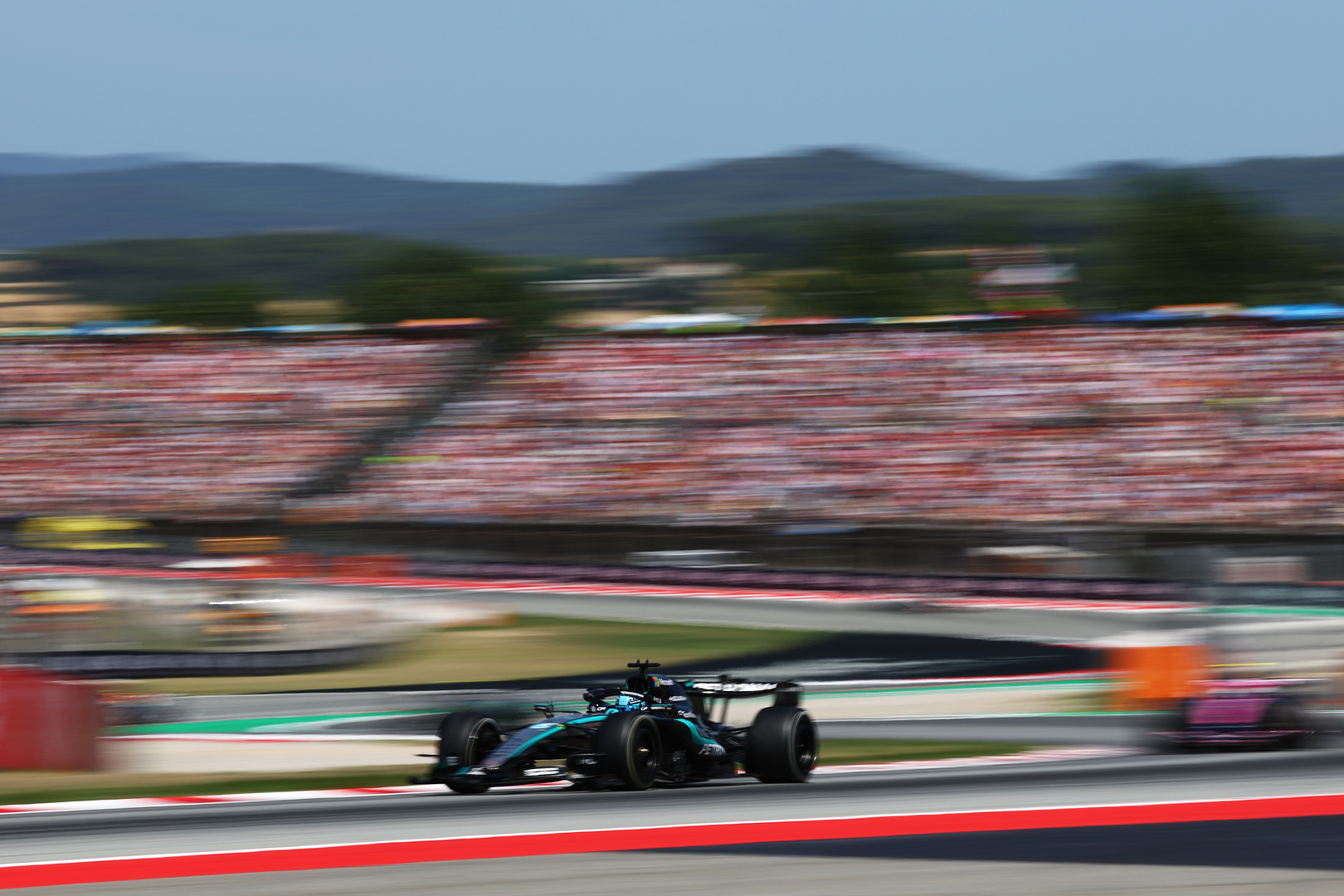
Let’s face it: Mercedes are the favourites to win both the drivers’ and constructors’ championships.
At the time of writing, they hold a 72-point lead over Ferrari in the constructors’ standings, while Kimi Antonelli leads the drivers’ championship with 41 points.
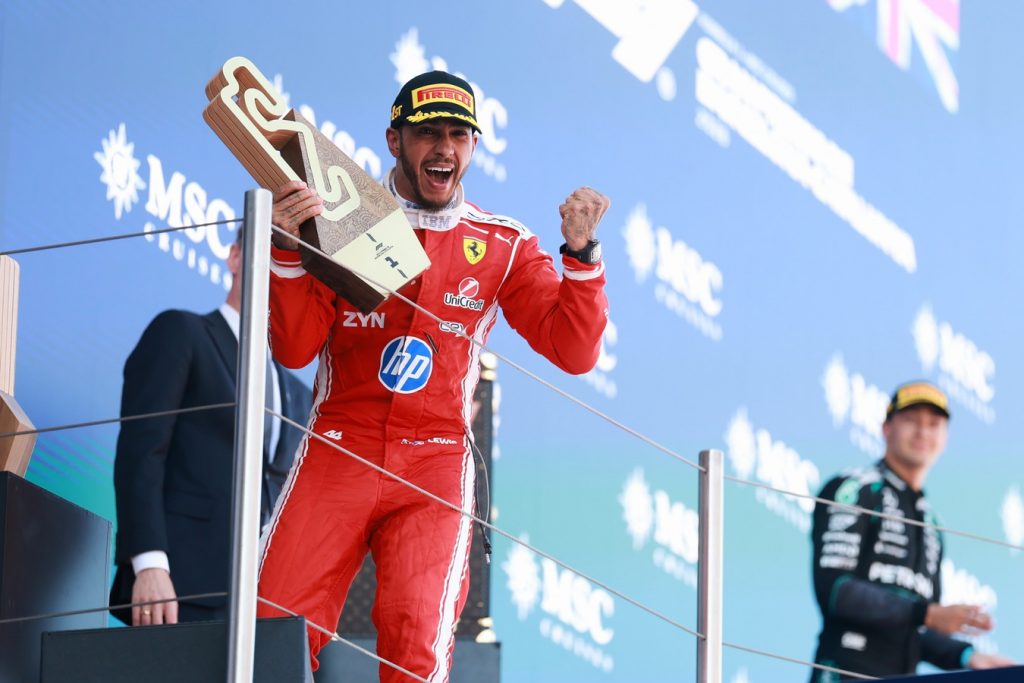
In fact, Mercedes locked out the top step of the podium all season until Lewis Hamilton broke their winning streak at the Circuit de Barcelona-Catalunya. Not only did it mark Ferrari’s first win since the 2024 Mexico City Grand Prix, but it was also the first time this season a Mercedes driver failed to win on a Sunday.
So why did the FIA deem Red Bull’s engine the best? And how will F1’s new engine upgrade system shift the tides in the current title fight?
ADUO F1 101: What Is It?
“ADUO” stands for “Additional Development and Upgrade Opportunities”.
From 2026 to 2030, F1’s governing body, the FIA, will monitor each manufacturer’s Internal Combustion Engine (ICE) during specific periods of each season to create an “ICE Performance Index”.
To measure the ICE, the FIA considers several factors across measured laps: engine speed, input shaft torque, power from the Motor Generator Unit – Kinetic (MGU-K), and weight-for-power sensitivity on lap time across measured laps.
Most importantly, the ADUO assessment focuses on the ICE alone. The FIA admits this is not representative of full power unit performance since the Energy Recovery System (ERS) now plays a major role in overall power output as F1 strives for a near 50/50 split between petrol and electric.
How does the system work?
The entire point of ADUO is to let teams with a power deficit play catch-up.
Article 4.3 of Appendix C5 of the 2026 F1 Technical Regulations covers how many upgrades teams receive according to how far they are off the pre-determined benchmark ICE.
If a manufacturer’s ICE falls 2% or more behind the best-performing engine in the index, they earn one additional homologation upgrade in the current season and another in the following season.
If their Performance Index drops at least 4% below the leader, that allowance doubles: two additional upgrades this season, and two more next season.
When are the monitoring periods?
Under Article 4.2 of Appendix C5 of the 2026 F1 Technical Regulations, it states that the FIA monitors ICE performance across three distinct periods.
Due to recent calendar changes, the first period covered the opening five rounds (Australia, China, Japan, Miami, and Canada). The FIA must communicate these results no later than two weeks after the Canadian Grand Prix.
The second period covers Rounds 6 to 11 (Monaco to Hungary), and the third covers Rounds 12 to 18 (the Netherlands to Mexico City).
Once the FIA shares the results, eligible manufacturers receive their allowance notifications and can implement engine upgrades as early as the following race.
FIA’s shock ADUO verdict explained
The results from the outcome of the FIA’s analysis of the first ADUO monitoring period came during the Monaco Grand Prix weekend where the governing body sent a note to manufacturers in various motorhomes.
According to The Race, the FIA delivered a short, one-page note titled “Confirmation by FIA to Power Unit Manufacturers of ADUO status.”
The document featured a simple table ranking manufacturers against a designated benchmark. It offered little elaboration, instead dividing teams into three camps based on the system’s parameters.
The results? Red Bull emerged as the benchmark. Mercedes will receive one upgrade, while Ferrari, Audi, and Honda each would receive two for this season.
It is a frustrating piece of news for the Milton Keynes based team. After building their own power unit for the first time, they will receive zero engine upgrades. For an outfit with only one podium finish this season, this creates a major roadblock in their campaign.
Speaking to Sky Sports during the Barcelona Grand Prix weekend, four-time World Champion Max Verstappen expressed how “surprised” he was at Red Bull’s ranking, especially since Mercedes has won six of the season’s first seven races.
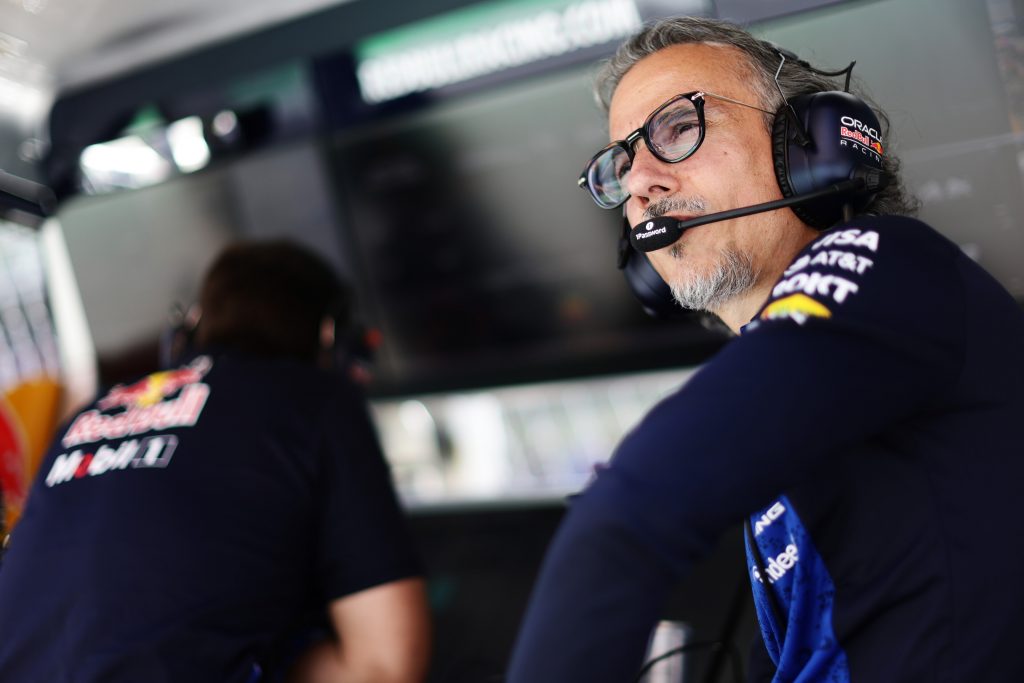
Red Bull Team Principal Laurent Mekies shared similar frustrations with the outlet:
We are completely with the fact that the rule states that you should only try to estimate the pecking order of the ICE (internal combustion engine) power. We are completely okay with that; we have all agreed to that, and we don’t think that is the issue. Where we certainly would like to have a deeper conversation is because we do not see one single data sample that indicates that we would have an advantage over our friends at Mercedes.
A June 13 report from The Race indicated that Red Bull CEO Oliver Mintzlaff met with FIA President Mohammed Ben Sulayem in Paris. The meeting highlights how the energy drinks giant is leaving no stone unturned to understand why they were classified as having F1’s best engine.
What upgrades will teams receive under F1’s engine catch-up system?
Teams that qualify to tune their power unit components can introduce developments from a permitted list of upgrades, including:
- Elements of the ICE
- Engine exhaust system
- Turbocharger and waste gate/pop-off
- ICE or exhaust-mounted electrical components and sensors
- ERS (and associated cooling systems)
- The MGU-K
- The car’s Control Electronics
- Hydraulic functions, fluids, and ballast
Crucially, ADUO upgrades don’t stack within a season. They are only granted the first time a manufacturer becomes eligible for development. Any upgrades left unused by the end of a specific season are permanently forfeited.
For example, if a manufacturer earns one upgrade for 2026 and another for 2027, the 2026 upgrade must be introduced before the end of the year. Otherwise, it is lost, while the 2027 upgrade remains valid.
FIA Single Seater Director Nikolas Tombazis has also clarified how these allowances fit into F1’s cost cap:
“It’s important to make clear that ADUO is not a kind of balance of performance mechanism. A team or manufacturer will not suddenly get greater fuel flow rate or more or less ballast. It is, in fact, a cost cap relief mechanism, where a PU manufacturer meeting ADUO criteria during a review period is given an opportunity to develop its engine through a downward adjustment.”
Doesn’t the recent FIA verdict make ADUO seem counterintuitive?
Following the FIA’s outcome of its analysis of the first ADUO monitoring period, the new engine upgrade system seems to have strayed from its original purpose. Rather than acting as a catch-up mechanism for struggling manufacturers, rivals could now exploit the system to narrow its advantage.
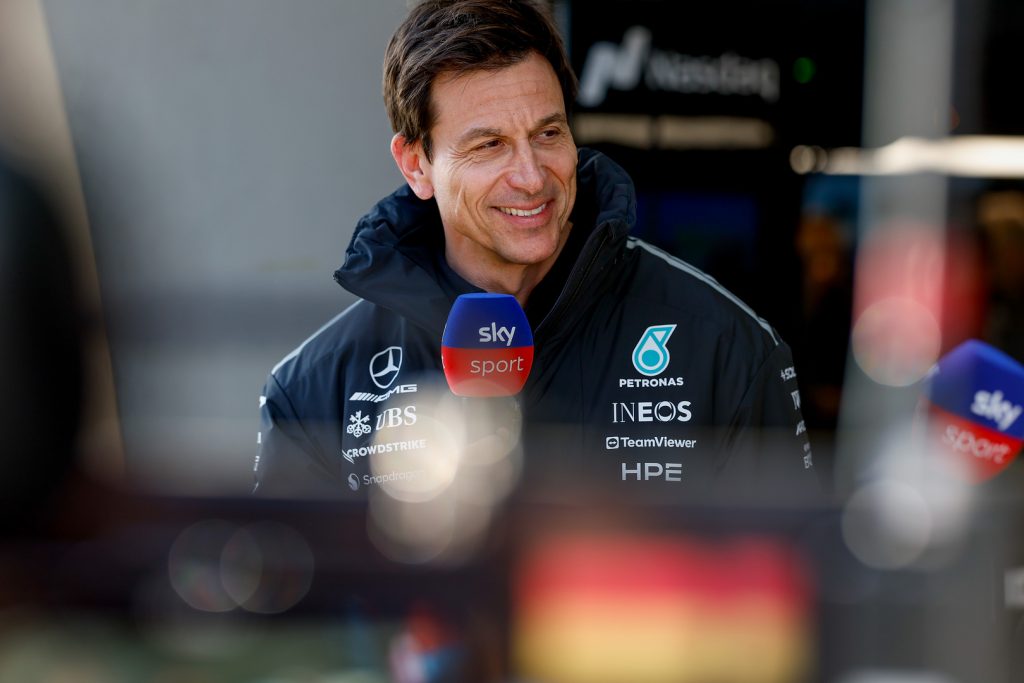
Weeks before the FIA’s shock verdict, Mercedes Team Principal Toto Wolff shared his reservations:
“The principle of the ADUO was to allow teams that were on the back foot to catch up – but not to leapfrog. I would be very surprised actually to see, and disappointed, if ADUO decisions come up with any interferences into the competitive pecking order as it stands at the moment.”
Wolff likely made these comments before knowing Red Bull would be deemed the benchmark. Still, his concerns carry weight. What’s more, pushback against the system will likely grow, given how the FIA’s outcome drastically contrasts with what is happening on track.
Another major criticism of the ADUO model centres on how it measures power units. The system evaluates only the Internal Combustion Engine (ICE), completely ignoring energy harvesting, deployment, and battery efficiency – factors equally critical to lap times.
The Race also reports the verdict could trigger demands to either ditch ADUO completely or overhaul the measurement process to look beyond raw ICE power.
In fact, the governing body has already considered this. Tombazis revealed the FIA previously proposed a more comprehensive measuring procedure, but car manufacturers rejected the idea.
Will Mercedes continue to dominate?
As things stand, Mercedes – who currently lead both championships – have a chance to extend their lead, as they will be permitted one engine upgrade for the 2026 season.
Even though the new rule preventing teams from exploiting the power unit compression ratio loophole is now in effect, the weekend in Barcelona proved that the Silver Arrows still hold the advantage.
On the driver front, current championship leader Kimi Antonelli is coming off a five-win streak with the team, while teammate George Russell appears to have found his groove after enduring a string of difficult race weekends.
With the FIA’s recent ADUO verdict, however, things could change. Ferrari were one of the power unit manufacturers with a power deficit of more than 4%. This will grant the Italian squad the chance to introduce two upgrades this season and next.
Sources suggest there could be big improvements on the engine side for the upcoming races. According to The Race, a significant power unit upgrade will arrive at the next race in Austria, with further developments slated for Zandvoort and Monza, along with a bigger turbo.
But how will this impact the F1 title fight in 2026?
Speaking to Sky Sports F1 after the Barcelona-Catalunya Grand Prix, 2025 World Champion Lando Norris believes that the Maranello squad will be a dominant force once they overcome the power deficit to Mercedes.
“We’re lucky that Ferrari don’t have a better engine at the minute. If they had a better engine they’re dominating. They’re the class of the field in terms of cornering performance at the minute and we’re not even close to them. It’s the realistic point of it, we’re a long, long way from where we need to be. If they make improvements on the engine side, then they’ll embarrass everyone.”
Still, the season is long. We have concluded just seven races, and while Hamilton has only recently broken Mercedes’ winning streak, Barcelona proved to be a weekend where everything clicked for the seven-time World Champion since he made the move to Ferrari.
Austria is also a track that offers the best of both worlds. Sector 1 favors power, whereas Sectors 2 and 3 feature a combination of low- to medium-speed corners that should suit cars with better aerodynamic performance. Either way, let’s see who comes out on top by the end of the Austrian Grand Prix.
**
Formula 1 returns June 26th in Spielberg, Austria.
Feature Image Credits: Mercedes AMG Petronas F1 Team