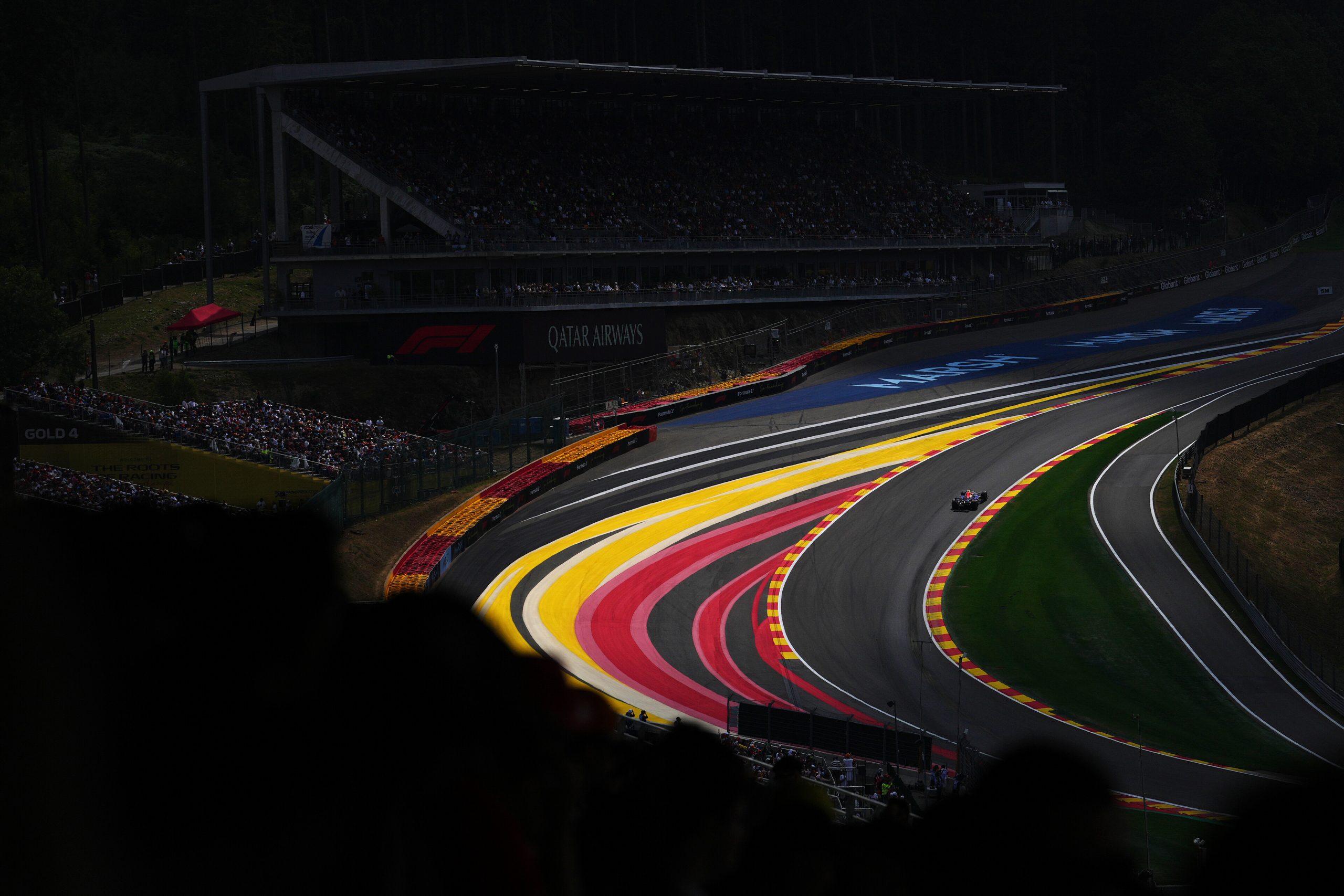
Mercedes’ young gun Kimi Antonelli produced yet another near-perfect weekend at the 2026 Belgian Grand Prix. The Italian was on top form around the Circuit de Spa-Francorchamps, converting pole position into a hard-fought victory to strengthen his grip on the Drivers’ Championship. The Belgian Grand Prix featured everything the iconic circuit is known for; dramatic crashes, plenty of grid penalties, strategic twists and wheel-to-wheel battles.
While Mercedes celebrated a return to the top step for one driver, it was less-than-rosy on the other side of the garage. Ferrari showed they are genuine contenders in the correct conditions once again, while Red Bull extracted the maximum from its package, and several midfield teams delivered standout performances. Read our Key Takeaways now to catch up on some stories you may have missed this weekend.
Antonelli regains his composure
After a difficult run in Silverstone by his own high standards, having had some car troubles in the later stages of the race, Antonelli arrived in Belgium looking to reassert himself at the front – and he did exactly that. The Mercedes driver steadily built momentum throughout the weekend, finishing fastest in both FP2 and FP3 before producing another exceptional lap in Qualifying to secure his sixth pole position of the season.
The race itself may not have been as straightforward as Antonelli would have liked; Verstappen got a great launch from second on the grid to snatch the lead through Eau Rouge on the opening lap. Antonelli remained composed and reclaimed P1 along the Kemmel Straight using the far superior straight-line speed of the Mercedes. However, later in the race, Ferrari’s strategy briefly dropped Antonelli behind Charles Leclerc during the Virtual Safety Car pit cycle, forcing the Italian to hunt down the Ferrari in the closing stages. As we’ve seen already in Antonelli’s short Formula 1 career, the youngster is not shy to a challenge. He gradually chipped away at the gap before making the decisive move with just 10 laps remaining, eventually taking the chequered flag almost two seconds clear.
Russell’s retirement raises questions
While Antonelli celebrated one of the strongest weekends of his career, the other side of the Mercedes garage was left searching for answers. George Russell never really looked comfortable in his car at Spa, struggling throughout practice and Qualifying to match his teammate’s pace. The Briton repeatedly complained of a lack of straight-line speed, losing significant time on the Kemmel Straight and suggesting there was a deeper issue with his car rather than a problem with his driving.
The weekend would go from bad to abysmal by lights-out; Russell’s race unravelled almost immediately. After starting third, Russell was quickly swallowed up on the run from La Source to Les Combes, losing positions before making contact with Lewis Hamilton when he attempted to recover. The collision sent him into the gravel and brought out the Safety Car, ending his afternoon before the opening lap had even finished. Hamilton was later handed a five-second penalty for causing the incident, but Russell’s frustrations extended well beyond the Ferrari driver.
Is it the car, or the driver?
Throughout the weekend, Mercedes were unable to fully explain why Russell was consistently lacking straight-line performance compared to Antonelli. Team Principal Toto Wolff admitted after Qualifying that part of Russell’s deficit was “not his fault”, revealing the team had identified an unexplained loss of top speed and insisting they had left no stone unturned trying to find the cause. Wolff, however, was also quick to reveal that Russell simply wasn’t “gelling with the car” – but while stressing there were mechanical factors contributing to the gap. It’s important to note that the Mercedes driver had previously revealed that he has changed his driving style to suit the car this season.
The controversy only deepened after the race, with Wolff confirming that Mercedes had discovered a power deployment issue affecting its engines at the race start. The team boss explained that the problem particularly compromised Russell’s getaway and left him vulnerable on the opening lap. While Antonelli was able to recover from the issue, Russell paid the ultimate price as he was left exposed in traffic before the collision with Hamilton.
With Antonelli winning comfortably while Russell endured another weekend plagued by technical concerns, Belgium has intensified scrutiny over Mercedes’ ability to provide equal performance across both sides of the garage. Whether the issue is purely mechanical, as the team now insists, or part of a wider challenge understanding the complex 2026 power unit regulations, the unanswered questions surrounding Russell’s car are quickly becoming one of the biggest talking points of each race weekend. After this past weekend in Spa-Francorchamps, Russell has lost his second place in the Drivers’ Championship, overtaken by his ex-teammate Hamilton.
McLaren leave Spa wondering what could have been
McLaren showed strong pace across the weekend – but ultimately failed to convert that speed into the result they were capable of achieving. Norris qualified third with an excellent lap but immediately lost the benefit of that performance with his 10-place grid penalty, which was decided before the weekend began. The PU changes forced the current World Champion to start only 13th despite looking like a genuine podium contender.
Still, the team tried to get him onto that podium with an alternative strategy, starting Norris on the hard compound and allowing him to climb through the field during the opening stint. However, delaying his first pit stop ultimately left him vulnerable as his tyres faded, and a slow stop dropped him back before he eventually recovered to seventh.
Piastri’s weekend was also frustrating. After losing valuable practice time with hydraulic problems on Friday, he became entangled in a race-long battle with both Ferraris. Contact with Leclerc caused damage to his McLaren, compromising his pace during the second half of the race. The Aussie eventually crossed the line in fifth, leaving McLaren to wonder how much more might have been possible without the penalty and racing incidents.
Red Bull’s young guns continue to impress
Away from Verstappen’s podium finish, Red Bull and their sister team, the Racing Bulls, had plenty of reasons to be encouraged by the performances of its younger drivers. Red Bull’s Hadjar was consistently among the fastest throughout practice, despite his weekend being compromised by a 20-place grid penalty before he even hit the track. The Frenchman qualified inside the top 10 before producing one of the standout drives of the race, slicing through the field from the back to finish sixth.
Over at the Racing Bulls, Arvid Lindblad also continued his impressive rookie campaign. The young Brit regularly featured near the front during practice, securing another Q3 appearance with eighth in Qualifying. Better still, Lindblad converted that P8 into ninth place in the race, garnering some more points for the board – although the fiercely competitive youngster would undoubtedly be looking for more. Nevertheless, his consistency continues to strengthen his reputation as one of Formula 1’s brightest young talents.
Ferrari stand as Mercedes’ biggest threat
Ferrari looked competitive from the moment practice began – and maintained that pace throughout the weekend. Lewis Hamilton and Charles Leclerc finished second and third respectively in FP1 behind Verstappen and both drivers remained firmly in the mix during every session, despite Mercedes holding an advantage over a single lap.
Still, even with the speed, Hamilton’s weekend was anything but smooth; a heavy crash at Turn 13 during FP3 left Ferrari facing a race against time to repair significant damage to the suspension, floor and rear wing before Qualifying. Thanks to the effort of the mechanics, Hamilton returned for the afternoon session and qualified sixth – just 0.002 seconds behind team mate Leclerc.
On race day, the two Ferrari drivers experienced very different afternoons. Leclerc ran a clean race, despite a near-miss with Oscar Piastri. The Monegasque benefitted from Ferrari’s strategy to briefly inherit the lead from Antonelli, before ultimately finishing second after Antonelli fought back. Hamilton’s race was far more troubled; contact with his ex-teammate George Russell on the opening lap sent the Mercedes driver careering into the gravel, and earned Hamilton a five-second time penalty. Later, during his pit stop, Ferrari released him into the path of one of its own mechanics, resulting in a post-race investigation for an unsafe release. Despite the trouble, Hamilton still recovered to finish fourth, highlighting Ferrari’s impressive race pace throughout the weekend. Ferrari were later fined €30,000 of which €10,000 is suspended for 12 months.
Verstappen extracts everything from Red Bull
Red Bull arrived at Spa carrying some uncertainty after reverting Verstappen’s car to an older-specification rear wing following recent crash damage in Austria and Silverstone. Any concerns quickly disappeared in FP1 as Verstappen immediately topped the timesheets, setting the pace ahead of both Ferraris.
The Dutchman remained consistently competitive throughout the weekend, qualifying alongside Antonelli on the front row and making the perfect getaway to lead the race through Eau Rouge on the opening lap. Although he could not quite match the long-run pace of Mercedes or challenge Antonelli in the closing stages, Verstappen still secured another valuable podium finish. Considering the equipment compromise and the pace Ferrari displayed all weekend, third place represented another example of Verstappen extracting the maximum possible from his package.
Crashes and interruptions shaped practice
Spa-Francorchamps once again reminded everyone why it remains one of Formula 1’s most demanding circuits, with several incidents disrupting the three practice sessions. Pierre Gasly suffered the biggest accident on Friday afternoon, losing control exiting Turn 13 in FP2 and heavily damaging the rear of his Alpine. The shunt brought out the second red flag of the session and left Alpine with significant repair work overnight.
Ferrari faced similar concerns just 24 hours later when Hamilton suffered an almost identical accident at exactly the same corner during the closing moments of FP3. The seven-time World Champion lost the rear of the car before sliding into the barriers, forcing Ferrari into an intensive rebuild ahead of Qualifying. Elsewhere, Oscar Piastri’s FP1 ended early with a hydraulic problem that delayed his running in FP2, while repeated trips through the gravel by several drivers scattered debris across the circuit and caused further interruptions during Friday’s running.
Grid penalties shook up the weekend
Before Sunday’s Grand Prix had even begun, several of the field had already accepted significant grid penalties after taking new power unit components. Lando Norris took a 10-place grid drop after McLaren introduced fresh engine elements, while extensive changes to Isack Hadjar’s Red Bull resulted in a 20-place penalty. The penalty sent him to the back of the grid despite showing excellent pace throughout practice, and both the Frenchman and Norris delivered excellent redemption races, finishing in sixth and seventh respectively.
Fernando Alonso also joined the list after Aston Martin fitted several new power unit components, automatically consigning the Spaniard to a back-of-the-grid start. The Spaniard’s Lance Stroll received a similar penalty, while Carlos Sainz became the latest addition after Qualifying when Williams installed additional power unit elements, dropping him from 15th to 19th on the grid.
Williams’ difficult campaign continues
Belgium proved another frustrating weekend for Williams, with very little going according to plan. Carlos Sainz was off to a bumpy start on the Friday, being investigated for crossing the pit entry line during FP1. On Saturday, the Spaniard would be back under investigation again in FP3 for a yellow flag infringement. His pace never quite matched that of the leading midfield runners, and after qualifying only 15th, an additional power unit change dropped him further back to 19th on the grid.
Albon’s weekend was equally disappointing as he suffered another Q1 elimination before both Williams drivers spent Sunday’s race fighting outside the points. Contact early in the Grand Prix further complicated Sainz’s afternoon, while the team’s overall lack of pace left them unable to challenge the leading midfield runners. At this point in the season, the Williams looks to be, quite simply, out-developed by the field around them.
A relaxing Spa weekend, as always
Just like we have become accustomed to at Spa-Francorchamps, strategy proved almost as important as outright pace. Multiple Safety Car and Virtual Safety Car periods repeatedly reshuffled the order, forcing teams to constantly reassess their plans. Ferrari briefly stole the initiative by jumping Antonelli during the pit cycle, while Norris attempted an ambitious long first stint on the hard tyres in the hope of capitalising on a late neutralisation.
In the end, however, Antonelli’s pace proved decisive. After recovering the lead from Leclerc in the closing stages, he controlled the final laps to secure a deserved victory, while Ferrari, Red Bull and McLaren were left to reflect on opportunities that had just slipped away. The Belgian Grand Prix once again delivered an absorbing mix of strategy and drama, reinforcing exactly why we look forward to our Spa weekend every year.
Formula 1 returns on the 24th July in Budapest for the Hungarian Grand Prix.
Featured image: Getty Images / Red Bull Content Pool