
Formula 1 did not need a race weekend to dominate the headlines and neither did the series around it.
A disrupted calendar, a sudden leadership exit and growing concerns over 2026 combined to shape a week that revealed more about the sport’s direction than any on-track result.
Bahrain and Saudi Arabia lose their April slots as F1’s support ladder takes a direct hit
A calendar shock that hits more than Formula 1
Formula 1 did not just lose two races last week. It lost a key part of its early-season structure.
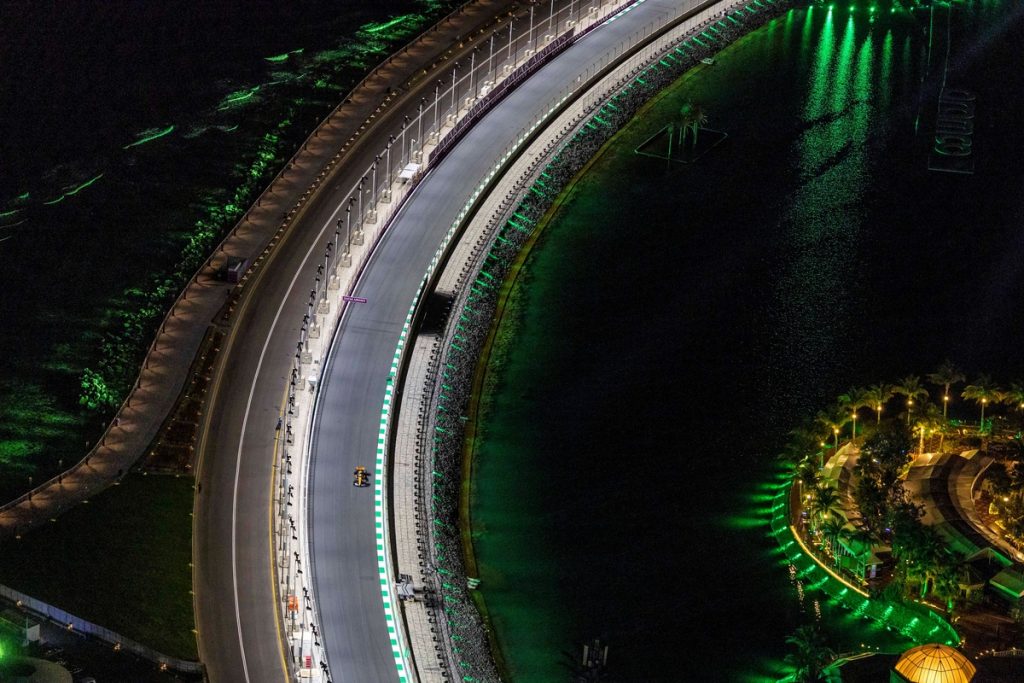
On March 14th, the sport confirmed that the Bahrain and Saudi Arabian Grands Prix would not take place in April due to the ongoing situation in the Middle East. The FIA, Formula 1 and local promoters aligned on the decision, and no replacement events will fill those slots. That alone reshapes the calendar. The wider impact goes further.
Bahrain had been scheduled to host F1, Formula 2 and Formula 3, while Saudi Arabia was set for F1, Formula 2 and F1 Academy. In one move, the sport removed two F1 rounds, two F2 weekends, one F3 meeting and one F1 Academy event. Formula 2 also lost its Bahrain in-season test, which would have provided critical mileage early in the campaign.
The headline number drops the 2026 calendar from 24 races to 22, but the timing matters more than the count. A five-week gap now opens between Japan and Miami. That gap breaks the rhythm modern Formula 1 relies on. The championship markets itself as continuous, global and relentless. This interruption exposes how fragile that flow can be when external factors take control.
For teams, the change alters preparation cycles and data collection. For drivers, it disrupts momentum just as the season begins to form. And for the sport itself, it sends a clear message. Formula 1 may look stable, but its schedule still depends on conditions far beyond the paddock.
The ladder takes the real hit beneath the surface
The deeper damage sits below Formula 1, where development matters more than exposure.
Bahrain and Jeddah form a crucial early-season corridor for junior categories. Bahrain offers stable conditions, repeatable data and long-run consistency. Jeddah provides the opposite, a high-risk environment that rewards confidence and precision. Together, they create a balanced test of a young driver’s ability.
Remove both, and the consequences spread quickly.
Formula 2 loses not only two race weekends but also its Bahrain test. That test often shapes the early competitive order. Without it, teams rely on limited data and shorter learning windows. Drivers who adapt quickly may gain an advantage. Others lose the chance to build rhythm before the season tightens.
Formula 3 feels the loss in a different way. The category runs fewer sessions and compresses development into tight weekends. Losing Bahrain reduces already limited track time. That shifts the championship dynamic toward immediacy rather than progression.
F1 Academy faces the most subtle impact. The series continues to build identity and visibility within the Formula 1 platform. Every shared weekend strengthens that connection. Removing Jeddah slows that growth at a stage where consistency matters most.
Safety and logistics justified the cancellations, and the decision reflects operational reality. Still, the outcome highlights a structural truth. Formula 1 sits at the top, but it relies on a tightly connected ladder beneath it. When two events disappear, the disruption does not stop at the headline series. It reshapes development pathways that may only show their effects later in the season.
Wheatley’s sudden Audi exit raises bigger questions than it answers
Audi wanted stability. Instead, it now has another vacuum.
On March 20th, the team confirmed that Jonathan Wheatley had left with immediate effect, citing personal reasons. The timing landed like a shock. Wheatley only joined the project last year, and Audi had framed him as one of the key figures meant to guide its full works transition into Formula 1. Mattia Binotto will now absorb the role temporarily while Audi reshapes its senior structure.
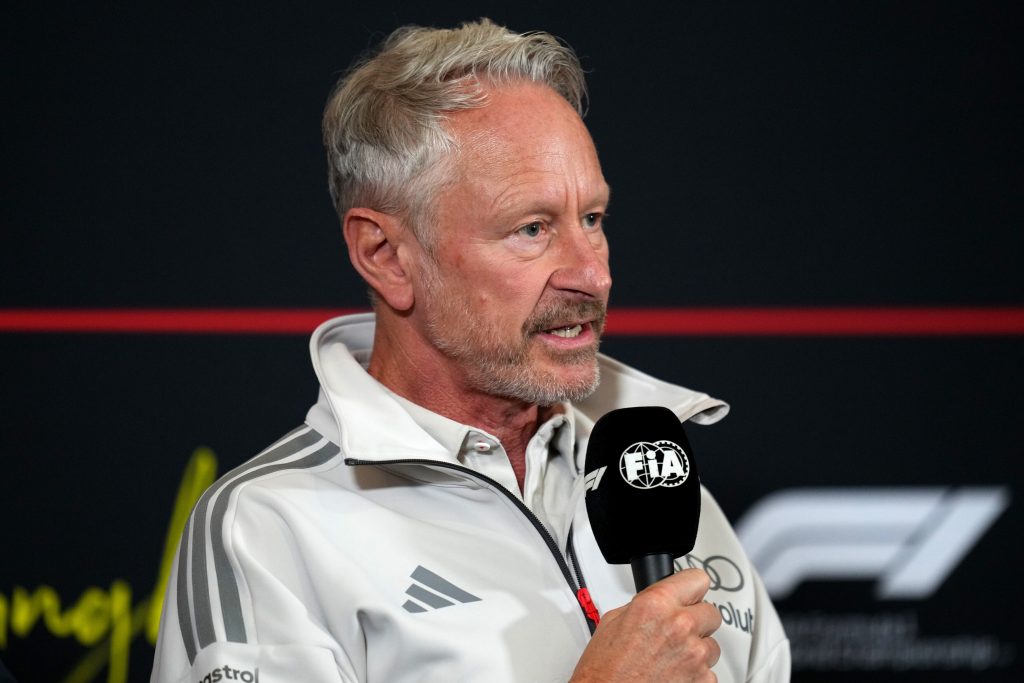
That makes this more than a routine management change. Audi is still trying to define itself before its long-term project properly settles, so losing a senior figure at this stage damages more than continuity. It hurts perception. A new manufacturer can survive poor weekends. It struggles far more when the leadership picture starts to blur.
Speculation moved fast because the paddock had already started connecting Wheatley with Aston Martin. Reuters reported one day earlier that Aston Martin felt compelled to state publicly that Adrian Newey remains team principal, after growing media reports linked Wheatley with a move to Silverstone. That statement did not confirm a deal, but it did show how seriously the rumours had grown.
So the story does not end at Hinwil. Wheatley’s exit immediately shifts attention to Silverstone, where Aston Martin had already found itself answering questions about Adrian Newey’s role. For Audi, that is the uncomfortable part. A team trying to project stability now looks like the starting point of a larger paddock chain reaction.
Aston Martin moves quickly to shut down the Wheatley-Newey noise
That pressure surfaced almost immediately.
One day before Audi confirmed Wheatley’s exit, Aston Martin publicly pushed back on growing speculation that he could arrive and alter Adrian Newey’s position. Lawrence Stroll said Newey remains Team Principal and Managing Technical Partner, while Reuters reported that no deal had been finalised to bring Wheatley across from Audi.
That response matters because teams do not usually step in unless the noise has started to bite.
Aston Martin did more than defend Newey. It showed the conversation had grown loud enough to demand a public correction. So while Audi deals with the shock of losing Wheatley, Aston Martin now has to manage the perception that one rival’s instability may be tied to its own next move.
Mercedes formalises its structure with Bradley Lord promotion
Mercedes chose consolidation, not noise.
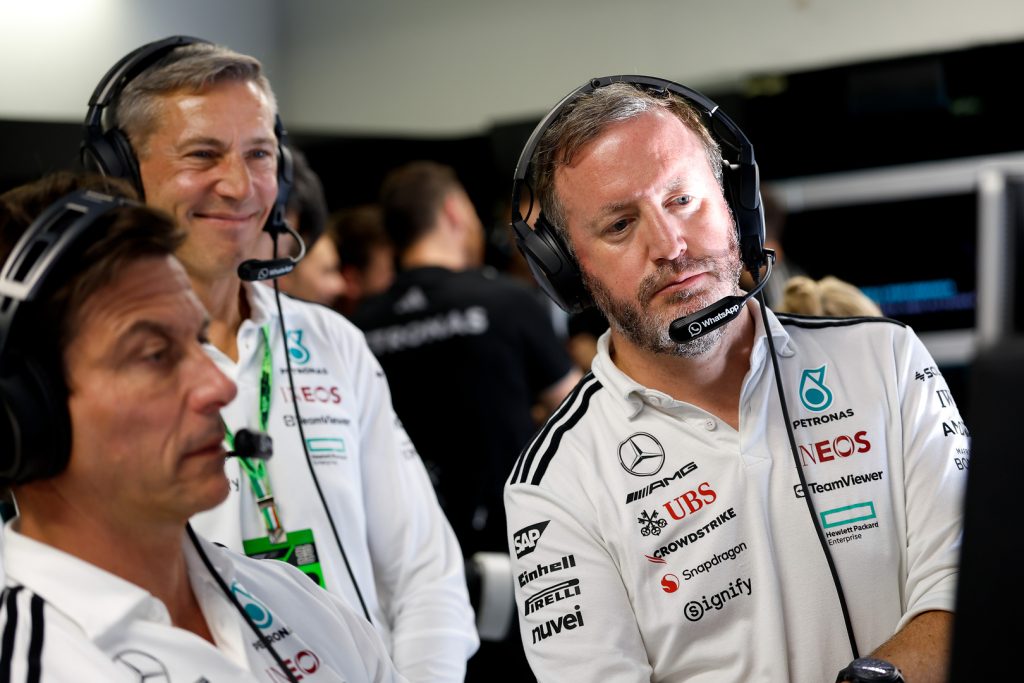
Also on March 20th, the Silver Arrows promoted Bradley Lord to Deputy Team Principal with immediate effect, while he continues as Team Representative and Chief Communications Officer. Toto Wolff said the move reflects the growing scale of the team and the wider demands of Formula 1. Reuters added that Lord has worked with Mercedes since 2010 and will now take on a broader operational role beside Wolff.
That makes this more than an internal title change.
Mercedes opened 2026 with back-to-back one-two finishes in Australia and China, so this decision feels less like a reaction and more like a team locking in its structure while momentum is on its side. In a week where Audi lost Jonathan Wheatley, Mercedes sent the opposite message: clarity, continuity and control.
Drivers warn 2026 starts could trigger a major accident
The noise around 2026 is no longer just about racing quality. It is now about risk.
Several drivers warned in Shanghai that the new start procedure and power delivery profile could create a major start-line crash unless Formula 1 adjusts the rules. The concern centres on uneven low-speed acceleration under the new power units, which now rely on a 50-50 split between combustion and electrical power and no longer use the MGU-H to keep the turbo spooled. That leaves some cars launching far harder than others, especially deeper in the pack.
Liam Lawson described a near-miss in Australia, where he saw Franco Colapinto’s Alpine closing rapidly after his own slow getaway. Carlos Sainz also warned that the speed differential could create dangerous scenarios, while drivers pointed to the new Boost function as another factor that can widen closing speeds during wheel-to-wheel moments.
That gives this issue more weight than a normal early-season complaint.
Drivers often grumble when big regulation changes arrive. This feels different. The language has shifted from frustration to alarm. When multiple drivers say a large accident feels inevitable, Formula 1 cannot dismiss it as adaptation noise. The sport wanted a new technical era. It may now need to decide how much instability it is willing to tolerate before safety forces its hand.
Feature Image Credit: AUDI AG