GP2 was the final exam. It was not always fair. It was rarely gentle. But for a decade, it was the clearest translation layer between junior racing and Formula 1.
Its grid mixed prodigies, late bloomers, and survivors. Its weekends punished weak tyres and weak minds. It also created a strange truth. Winning GP2 did not guarantee Formula 1 success. Yet losing it did not block greatness either.
List of Champions
- 2005 – Nico Rosberg
- 2006 – Lewis Hamilton
- 2007 – Timo Glock
- 2008 – Giorgio Pantano
- 2009 – Nico Hulkenberg
- 2010 – Pastor Maldonado
- 2011 – Romain Grosjean
- 2012 – Davide Valsecchi
- 2013 – Fabio Leimer
- 2014 – Jolyon Palmer
- 2015 – Stoffel Vandoorne
- 2016 – Pierre Gasly
Nico Rosberg (2005) – GP2’s First Champion to F1 Glory
The son of 1982 F1 champion Keke Rosberg, Nico Rosberg quickly made a name for himself in junior formula. In GP2’s inaugural 2005 season, driving for the ART Grand Prix team, Rosberg excelled, achieving five wins and seven additional podium finishes en route to becoming the inaugural GP2 Series Champion.
This title combined with the marketability of the Rosberg name earned him a prompt graduation to Formula 1 with Williams for 2006. At just 20 years old, Rosberg stepped up as a rookie F1 driver the very next season, signalling GP2’s immediate impact as a talent pipeline.
From GP2 Title to Formula 1 World Champion
Rosberg’s F1 career started solidly at Williams and truly blossomed after a move to the Mercedes works team in 2010. He famously duelled with teammate Lewis Hamilton during Mercedes’ dominant era, culminating in Rosberg clinching the 2016 Formula 1 World Championship after a bitter season-long battle.
Mere days after achieving his lifelong goal, he stunned the sport by retiring from F1 at the age of 31.
In retirement, Rosberg has remained in the racing orbit as an outspoken TV pundit and an entrepreneur. He’s invested in green technology start-ups and even co-founded a racing team in the electric off-road Extreme E series, channelling his competitive drive into sustainable ventures.
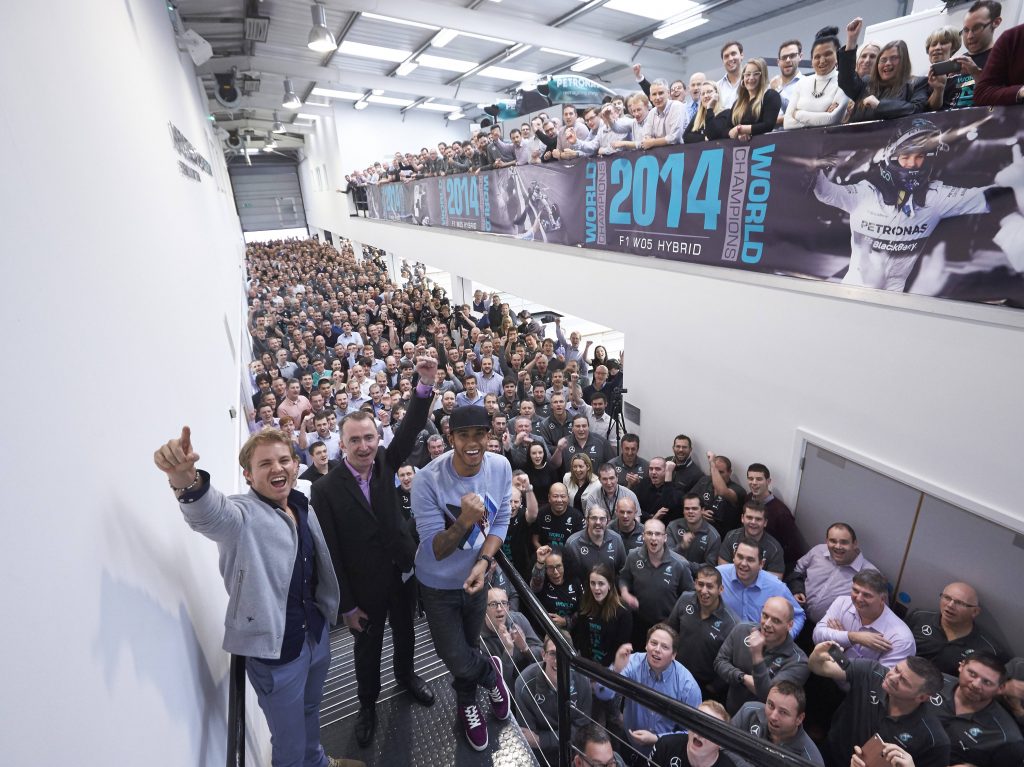
Lewis Hamilton (2006) – GP2 Phenom Turned F1 Superstar
Lewis Hamilton arrived in GP2 with sky-high expectations as a prodigious McLaren junior. Fresh off a Formula 3 Euro Series title, the Briton joined ART Grand Prix and promptly justified the hype. He claimed the 2006 GP2 title in his rookie year with a series of dazzling drives, including five feature-race victories, edging out rival Nelson Piquet Jr. by 12 points.
Hamilton’s electrifying overtakes and consistency marked him as something special. His GP2 success, combined with Michael Schumacher’s retirement triggering F1 seat shuffles, opened the door for Hamilton’s immediate promotion to McLaren’s Formula 1 lineup for 2007. In effect, GP2 had been the final springboard for a generational talent’s leap into Grand Prix racing.
Rookie to Champion: Hamilton’s F1 Ascent
Hamilton’s impact on F1 was instantaneous. He stormed to the podium in his debut Grand Prix and remarkably finished on the podium in his first nine races, signaling that a new star had arrived. The very next year, at 23, Hamilton clinched his maiden F1 World Championship in dramatic fashion at the 2008 Brazilian GP.
Over the following years he endured competitive ebbs and flows with McLaren, then boldly switched to the up-and-coming Mercedes team in 2013.
That move proved transformative: Hamilton would go on to dominate the hybrid era, collecting a record-tying seven Formula 1 World Drivers’ Championships and over 100 Grand Prix wins, carving his name among the sport’s all-time greats.
Having led the charge against formidable rivals and alongside strong teammates, Hamilton remains the benchmark of his generation and as of 2025, he’s still chasing new records in F1’s front ranks, now in scarlet Ferrari.
Timo Glock (2007) – A Comeback Champion
Timo Glock’s path to GP2 glory was unconventional. The German actually tasted Formula 1 first – he debuted with Jordan in 2004 and even scored points in his maiden race as a stand-in. When an F1 seat evaporated amid team politics, Glock recalibrated his career by racing in America’s Champ Car in 2005 before returning to Europe.
In GP2, he found his footing with iSport International: after a mid-season team switch in 2006 boosted his form. Glock carried that momentum into 2007. He notched five wins and clinched the GP2 championship by an 11-point margin over Lucas di Grassi. Having proven himself the top GP2 driver, Glock earned a second chance in Formula 1 – signing with Toyota for the 2008 season.
F1 Highlights and DTM Second Act
Back in F1, Glock became a solid midfielder. With Toyota in 2008–2009 he delivered a few eye-catching drives, including a podium finish at the 2008 Hungarian Grand Prix and two fourth-place results.
However, Toyota’s withdrawal at the end of 2009 left Glock scrambling. He joined the start-up Virgin/Marussia team in 2010, but with a backmarker car he never scored another F1 point.
After parting ways with Marussia in early 2013, Glock shifted to Germany’s DTM touring car championship. There, he became a race winner and a veteran presence for BMW between 2013 and 2020.
Even in the 2020s, Glock has stayed active in motorsport with occasional guest entries – a testament to a career that, while never reaching F1 victory lane, showcased resilience and adaptability across racing disciplines.
Giorgio Pantano (2008) – Veteran Prevails in GP2
Italian driver Giorgio Pantano was a rare case of an F1-experienced driver dropping into GP2 to revive his career. Pantano had raced part of the 2004 F1 season with Jordan, but by 2005 found himself without a drive.
Turning to GP2, he spent multiple seasons honing his craft. After steady progress – 5th in the 2006 GP2 standings (with a win at Magny-Cours) and 3rd in 2007 – Pantano finally put it all together in 2008.
Driving for Racing Engineering, he clinched the title with four victories that year. Rules prevented the reigning champion from remaining in GP2, so Pantano hoped his title would spark a return to Formula 1. Unfortunately, no F1 seat materialized for the 29-year-old champion, illustrating that success in GP2 wasn’t a guarantee of a top-flight opportunity – especially for a driver who’d already had a shot at F1.
Post-GP2 Journeyman Career
With F1 doors closed, Pantano’s post-2008 career was a patchwork of series. In 2009 he switched to the Superleague Formula (a now-defunct championship linking racing teams with football clubs) and even scored a win at Magny-Cours, showing he could still triumph in a high-level machine.
He made sporadic appearances in IndyCar in 2011 and 2012 and competed in GT endurance races like the Blancpain Sprint Series, but sustained drives were hard to come by.
His trajectory underscored the harsh reality that even a GP2 title, when achieved later in a career, could not always rewind the F1 clock – Pantano ultimately stepped away as a talented driver whose big break came too late to resuscitate his F1 ambitions.
Nico Hülkenberg (2009) – Unstoppable to Unfulfilled
Nico Hülkenberg entered GP2 with sky-high credentials – he was already a Formula 3 Euro Series champion and A1GP champion. Linking up with ART Grand Prix (the defending teams’ champions), the young German delivered on expectations in the 2009 GP2 Series.
Hülkenberg proved unstoppable, capturing five race wins and wrapping up the championship with two races to spare. In doing so, he became the first driver since Hamilton to win the GP2 title as a rookie. Naturally, Formula 1 came calling immediately: Williams signed Hülkenberg for a race seat in 2010, mirroring the direct GP2-to-F1 jump of Rosberg and Hamilton before him.
At just 22, “Hulk” moved up to F1 on the back of a junior career that marked him as a future star.
Formula 1 Near-Misses and Le Mans Win
Hülkenberg’s F1 career, while long, would be defined by solid performances in modest machinery and an infamous absence of podium finishes. As a rookie he grabbed a stunning pole position in Brazil 2010, yet he finished that season without a podium and was dropped by Williams.
He became a reliable midfielder for Force India, Sauber, and Renault from 2012 through 2019, renowned for his race craft and consistency even though a top-three race finish always eluded him.
After losing his Renault F1 drive, Hülkenberg spent 2020–2022 as a dependable super-sub, filling in capably for side-lined drivers. His resilience was finally rewarded with a full-time comeback at Haas in 2023. Two years later, he achieved a long-awaited career milestone, scoring his first Formula 1 podium at the 2025 British Grand Prix with Kick Sauber.
Now set to continue with the team as it transitions into the Audi works entry for 2026, Hülkenberg’s longevity and adaptability have come full circle. His journey is a testament to the depth and durability of talent that GP2 graduates can bring to Formula 1.
Pastor Maldonado (2010) – Record-Breaker with a Wild Ride
Pastor Maldonado’s time in GP2 was a rollercoaster of raw speed and inconsistency. The Venezuelan had entered GP2 back in 2007 and showed flashes of brilliance – including a prestigious win in Monaco – but also gained a reputation for being fast but erratic.
After three seasons of learning curves, 2010 saw Maldonado finally put it all together with Rapax Team. He racked up an impressive six victories – a record for a single GP2 season – on his way to the championship title.
Backed by significant sponsorship from Venezuela’s PDVSA oil company, Maldonado leveraged his GP2 crown into a Formula 1 seat with Williams for 2011, displacing Nico Hülkenberg in the process. It was a payoff for persistence: after years of unfulfilled potential, Maldonado arrived in F1 as GP2’s newest champion, albeit with questions about his discipline on track.
Ups and Downs of an Unpredictable F1 Career
Maldonado’s Formula 1 stint proved every bit as unpredictable as his junior career. He struggled for consistency – crashes and errors were frequent – yet he delivered one of the most shocking Grand Prix victories in modern memory.
In Spain 2012, Maldonado drove a flawless race under pressure to claim an astonishing victory for Williams, becoming the first Venezuelan to win a Grand Prix. That singular high point aside, Maldonado’s results were modest. He scored only a handful of points in his other F1 seasons and could not replicate his Barcelona heroics.
After moving to the Lotus team in 2014, he continued to underperform relative to teammate Romain Grosjean and left F1 when his funding fell through at the end of 2015.
Post-F1, Maldonado found brief refuge as a test driver for Pirelli and then switched to sports cars. In 2019, he notched a class win at the 24 Hours of Daytona in LMP2 competition.
However, by 2020 his professional racing appearances had largely ceased. Maldonado’s legacy remains that of a mercurial talent – a GP2 champion and Grand Prix winner who, in the end, could not shake the inconsistency that dogged his career.
Romain Grosjean (2011) – Redemption and Return
Romain Grosjean’s path to the 2011 GP2 crown was shaped by setback and determination. After a difficult Formula 1 debut with Renault in 2009, he found himself cast aside. Many believed his top-level chances were finished. However, Grosjean refused to give up. He returned to the junior ranks and focused on rebuilding both his skills and reputation.
By 2011, racing with DAMS, Grosjean delivered a commanding performance throughout the GP2 season. He won five races and consistently finished at the front. His final margin of victory in the standings was a convincing 35 points.
This dominant campaign reminded the paddock of his raw speed and growing maturity. As a result, the Lotus team (formerly Renault) brought him back to Formula 1 for the 2012 season, where he would partner with Kimi Räikkönen. Grosjean’s title was more than a trophy. It was his passport back into the elite ranks of motorsport.
F1 Crashs and Comebacks, to IndyCar
Grosjean’s return to Formula 1 showed early flashes of brilliance. He secured podiums with bold and clever drives. At the same time, he developed a reputation for chaos at the start of races. In 2012, his aggressive approach led to a crash at Spa that caused a major pile-up. The incident earned him a one-race ban and sharp criticism.
Over time, Grosjean learned to manage risk and polished his racecraft. His 2013 season marked a breakthrough, as he scored six podiums and placed seventh in the championship. As Lotus declined, Grosjean joined the new Haas team in 2016. There, he became an important figure in helping the team compete respectably in the midfield.
His Formula 1 career ended dramatically in 2020 after a terrifying crash in Bahrain. He escaped with burns but decided to step away from F1. Rather than retire, he embraced a fresh start in IndyCar. Since moving to the United States, Grosjean has secured podiums and earned respect for his passion and skill. His career now reflects resilience, versatility, and a fearless drive that first re-emerged during his GP2 revival.
Davide Valsecchi (2012) – Late Bloomer’s Title
Davide Valsecchi’s 2012 GP2 championship was a reward for years of persistence. The Italian driver had competed in the series since 2008, gradually building a reputation as a consistent and capable performer. Though not always in top machinery, he managed to win races in nearly every season he entered.
By 2012, racing with DAMS, Valsecchi finally found the perfect combination of speed and experience. He claimed four victories and maintained pressure on his main rival, Luiz Razia, throughout the season. In the end, Valsecchi emerged as champion by holding his nerve and scoring crucial points when it mattered most. At 25 years old, with five seasons of GP2 experience behind him, he hoped the title would finally open the door to Formula 1.
He was soon rewarded with a test and reserve driver role at Lotus for the 2013 F1 season. For a brief moment, it appeared that all the hard work in the junior ranks would translate into a spot on the Formula 1 grid. Valsecchi seemed to be standing just one step away from his dream.
From Testing Hopes to TV Career
Despite being Lotus’s official reserve, Valsecchi never got his chance to race in Formula 1. When Kimi Räikkönen left the team before the final two races of 2013, Lotus needed a replacement. Instead of calling up Valsecchi, they turned to experienced outsider Heikki Kovalainen.
That decision stunned many and effectively ended Valsecchi’s hopes of competing in Formula 1. He never started a Grand Prix and soon stepped back from active racing. Apart from a few GT appearances, his time as a driver quietly faded.
However, Valsecchi reinvented himself in a new role. In 2016, he joined Sky Sports Italia as part of their Formula 1 broadcast team. His passionate and energetic style quickly made him a fan favorite. Viewers appreciated his mix of technical knowledge and emotional commentary.
Though he never raced alongside the drivers he once battled in GP2, Valsecchi remained a vital part of the sport. Today, his voice echoes in living rooms across Italy as he continues to share the excitement of Formula 1 from the commentary booth.
Fabio Leimer (2013) – Perseverance and Collapse
Swiss driver Fabio Leimer proved that persistence could eventually pay off. He entered GP2 in 2010 and spent several seasons honing his craft. Each year, he showed gradual improvement and gained valuable experience against strong competition.
By 2013, Leimer had reached peak form. Racing for Racing Engineering, he strung together a consistent campaign built on three victories and frequent podium finishes. He amassed 201 points across the season and edged out title rival Sam Bird by a solid 20-point margin. This marked the highlight of his single-seater career.
At that moment, Leimer appeared to be standing on the threshold of Formula 1. His GP2 title suggested he had the right blend of speed and race craft to make the leap. However, financial backing proved elusive. Despite his championship, he lacked the sponsorship leverage that many teams required to offer a full-time seat. This left his F1 dream in limbo.
Career Falters After GP2 Glory
After winning the GP2 title, Leimer’s career momentum began to slow. He attempted to pivot toward Japan’s Super Formula series in 2015. However, the deal fell apart due to funding complications before he could turn a wheel.
That same year, he found a brief opportunity in Formula 1. He joined Manor as a reserve driver and took part in a Free Practice session at the Hungarian Grand Prix. Even so, a permanent race seat remained out of reach.
Leimer then explored a short stint in Formula E. He stepped in for two rounds during the 2014–15 season, although those races yielded little success. His time in top-level single-seaters effectively ended soon after.
In 2017, he appeared in a domestic Ferrari one-make series and won a race. However, this marked his final notable result. Since then, Leimer has faded from international motorsport.
His story serves as a reminder that talent alone is not always enough. Without timing, funding, or the right opportunities, even a GP2 champion can find the path to Formula 1 firmly closed.
Jolyon Palmer (2014) – From GP2 Elite to F1 Analyst
Jolyon Palmer, the son of former Formula 1 driver Jonathan Palmer, advanced through the junior ranks with patience and steady progress. By 2014, he had become one of the most experienced drivers in GP2. That season, driving for DAMS in his fourth campaign, he finally found the right combination of speed and maturity.
Palmer won four races, earned three pole positions, and wrapped up the title comfortably. He finished 47 points clear of rookie contender Stoffel Vandoorne. His run to the championship was not built solely on domination. Rather, it reflected strong racecraft, strategic thinking, and an ability to avoid costly mistakes across the calendar.
Following his GP2 title, Palmer tested with Force India. However, it was Lotus who offered him the next step, signing him as their reserve driver for 2015. The following year, as the team transformed into Renault, Palmer was promoted to a full-time Formula 1 seat. With a major opportunity now in hand, he set out to prove his place among the elite.
Short-Lived F1 Stint and Shift to Media
Palmer’s Formula 1 career began with promise but offered limited success. Driving for Renault in 2016, he faced a car that lacked competitiveness. Even so, he managed to score a single point with a tenth-place finish in Malaysia.
In 2017, there were glimpses of improvement. A sixth-place finish in Singapore showed his potential. However, across nearly two seasons, Palmer only scored points twice. Teammate Nico Hülkenberg often outpaced him. As a result, Renault made the decision to replace Palmer before the 2018 season began.
With few racing options available, Palmer shifted gears. He began working as a media analyst and quickly found his voice. He joined the BBC’s Formula 1 coverage and later became a contributor to F1’s official media platforms.
Today, Palmer is widely respected for his insight and clear analysis. His racing career may not have reached great heights, but he has found a lasting role within the sport. His journey shows that even when the driving stops, a strong understanding of racing can still make an impact.
Stoffel Vandoorne (2015) – Dominance to Recovery
Stoffel Vandoorne entered GP2 with sky-high expectations. Backed by McLaren’s driver development program, the Belgian talent had already shown flashes of brilliance in earlier junior categories. In 2015, he transformed that potential into a season of overwhelming dominance.
Driving for ART Grand Prix, Vandoorne secured seven wins and demonstrated exceptional consistency across the year. He locked up the championship with four races still remaining, ultimately finishing 160 points ahead of his closest rival. This commanding title run remains one of the most lopsided in GP2 history.
Naturally, such performance created immense anticipation for his Formula 1 debut. With no room at McLaren in 2016, Vandoorne shifted to Japan’s Super Formula. He adapted quickly and finished as vice-champion in a competitive field. That same year, he filled in for an injured Fernando Alonso at the Bahrain Grand Prix. He scored a point on debut, reinforcing his credentials as a future F1 star.
Vandoorne’s GP2 success was never in doubt. The only question left was how far his talent would take him once he reached the Formula 1 grid.
F1 Challenges and Formula E Champion
Vandoorne’s Formula 1 career began in 2017, but the timing was far from ideal. McLaren’s ongoing struggles with their Honda engine left him with unreliable machinery. Partnered with the experienced Fernando Alonso, he often found himself in the shadow of a seasoned teammate.
Despite moments of promise, Vandoorne failed to consistently break into the points. He managed a best finish of seventh place, and after two seasons, McLaren decided to part ways. His departure from Formula 1 seemed abrupt, yet it marked the start of a reinvention.
Turning to Formula E, Vandoorne joined the Mercedes-backed team and adapted to the electric racing format with impressive speed. He finished second in the 2019 season, then captured the 2022 Formula E World Championship through consistent performances and strategic brilliance.
In addition to Formula E, Vandoorne took part in endurance racing and achieved a class podium at Le Mans. He also returned to the F1 paddock in a reserve driver role, keeping one foot in the sport that had once slipped from his grasp.
Today, Vandoorne is seen as a symbol of adaptability. Though Formula 1 offered limited chances, he found championship glory elsewhere, proving that talent can thrive in many forms.
Pierre Gasly (2016) – GP2 Duel to Grand Prix Victory
Pierre Gasly’s championship-winning campaign in 2016 closed the GP2 chapter with drama and flair. As a member of the Red Bull Junior Team, Gasly had already been tipped for stardom, although a marquee title had remained elusive. Entering his third year in the category, he joined Prema Racing and immediately became a key contender. His main rival came from within, as teammate Antonio Giovinazzi pushed him throughout the season.
Gasly’s path to the crown was not smooth. Early errors and inconsistent results left him playing catch-up, but his composure improved as the campaign progressed. He delivered when it counted and sealed the title by just eight points, clinching the final GP2 championship before the series transitioned to Formula 2. While his win tally was modest, his control under pressure showed a driver maturing at the right moment.
Despite the title, a Formula 1 seat did not materialize immediately. With Red Bull’s senior teams already full, Gasly made the strategic decision to race in Japan’s Super Formula in 2017. There, he nearly claimed the title, missing out by just half a point. However, the message was clear. Gasly had proven himself across continents and remained very much on Red Bull’s radar for a future call-up to the top tier.
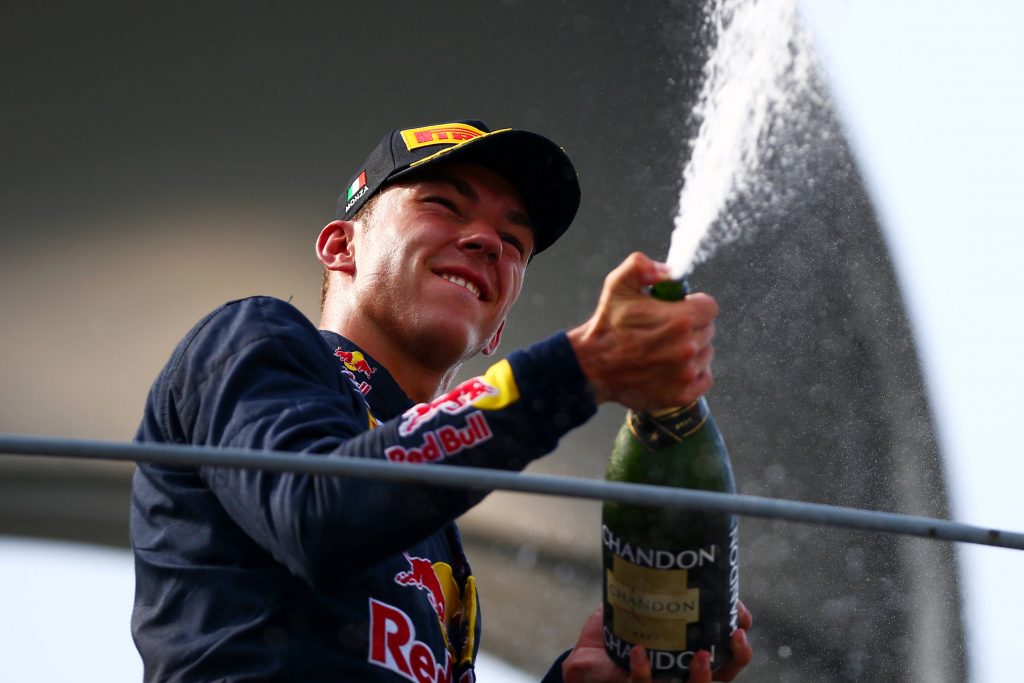
Formula 1 Trials, Triumphs and New Start
Gasly’s Formula 1 debut arrived late in 2017 when Toro Rosso gave him his first start. By the following year, he was racing full-time and making steady progress. A strong drive to fourth in Bahrain highlighted his potential and helped earn him a promotion to Red Bull Racing for 2019. The move was a milestone, placing him alongside Max Verstappen in one of the fastest cars on the grid.
However, the dream quickly became a struggle. Gasly failed to match Verstappen’s pace and struggled to handle the weight of expectation. Midway through the season, Red Bull made the difficult decision to send him back to Toro Rosso. Many feared his confidence would never recover. Yet Gasly responded with remarkable strength. He rebuilt his form at Toro Rosso and later AlphaTauri, regaining his edge and confidence.
The turning point came at the 2020 Italian Grand Prix. In an unpredictable race at Monza, Gasly capitalized on chaos and claimed his first Formula 1 win. It was a moment of redemption and validation. From that point on, he became a consistent threat in the midfield, leading AlphaTauri with poise and performance. In 2023, he stepped into a new challenge with Alpine, aiming to rise again with a works-backed operation.
As of 2025, Gasly remains an established presence on the Formula 1 grid. His journey, marked by resilience and reinvention, reflects the depth of character that was already beginning to show during his title-winning GP2 campaign.
The GP2 Legacy and What Comes Next
GP2 champions are not a single type. Some became champions of the world. Some became warnings about timing. Others became proof that racing careers have many peaks, not one.
That is why this list still matters. It is a record of who mastered the final junior step. It is also a record of how messy the path can be after that.
The story doesn’t end here. Soon, we’ll turn the page to the next era with a look at Formula 2 champions from 2017 onward. The drivers who’ve inherited the same proving ground, but in a rapidly changing Formula 1 landscape.