Formula 1 is in the off-season, but the paddock is not resting. This week delivered real movement: power structures locked in, driver identities shifted, and the 2026 era tightened its grip. Here is what mattered and what it means.
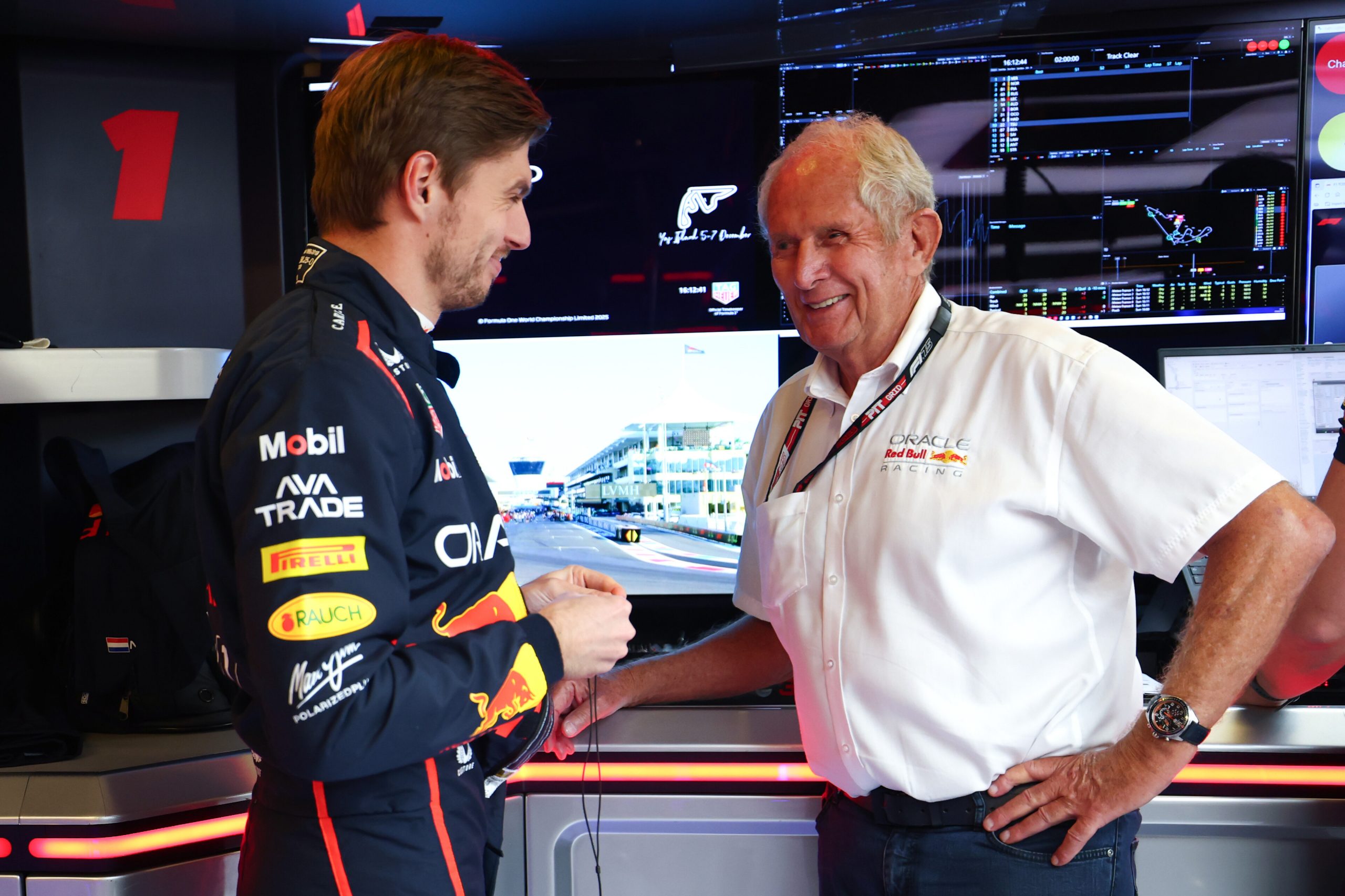
Helmut Marko exits: Red Bull’s identity reset begins
Red Bull does not do quiet endings. Helmut Marko stepping away after 2025 is not a staff change. It is a philosophical shift at the core of the team’s identity. For more than two decades, Marko was the architect of Red Bull’s competitive worldview. He shaped how talent was found, tested, promoted, and discarded.
The timing matters. Red Bull lost both championships in 2025, and the aura of inevitability around the programme faded. Margins tightened. Rivals closed in. Marko himself acknowledged the weight of that moment, admitting that:
“Narrowly missing out on the World Championship made it clear that now is the right time.”
Marko’s influence went far beyond contracts. He defined the junior system as a proving ground built on raw speed, mental resilience, and zero comfort. That clarity made Red Bull ruthless, but also brutally efficient.
Without him, the central question becomes unavoidable. Who controls the pipeline now? Talent development reflects values. Marko made those values unmistakable. His absence creates space for politics, compromise, or a new authority with a different edge.
Watch two signals closely. First, who gains final say on promotions and demotions. Second, how Red Bull handles its next wave of contracts. This is an identity story before it becomes a lap-time problem. The consequences will unfold slowly, but they will be structural.
Ben Sulayem re-elected: FIA continuity as 2026 approaches
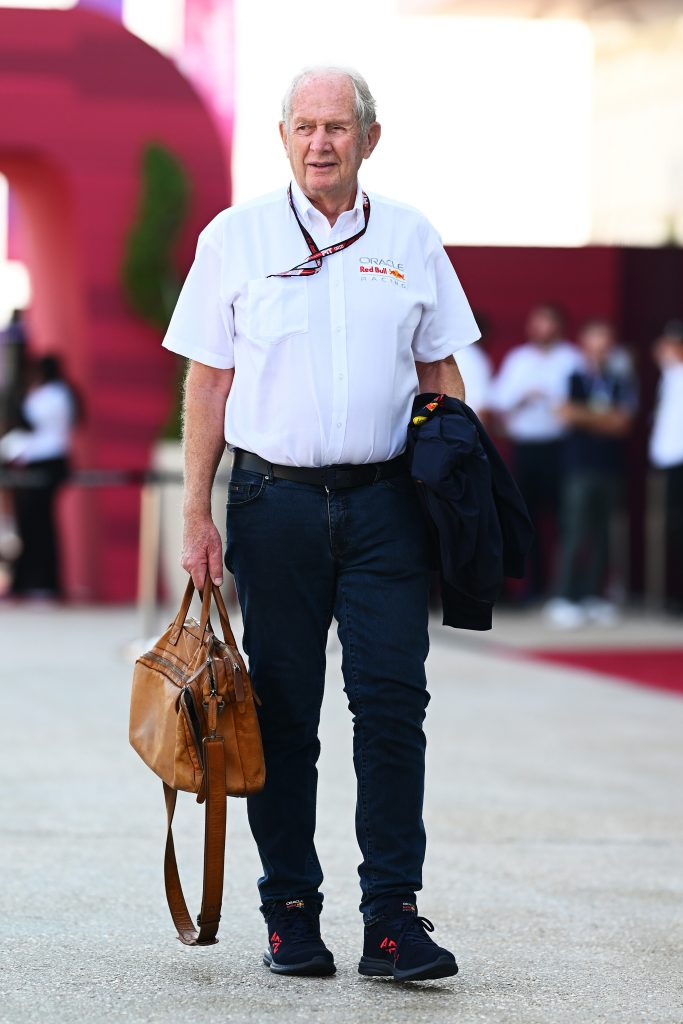
A sport that moves at 300 kph still runs on paperwork. Mohammed Ben Sulayem’s re-election, unopposed, is not dramatic on track, but it is consequential in governance. It signals continuity at the FIA just as Formula 1 accelerates toward its most disruptive regulatory reset in a decade.
Uncontested elections always split opinion. Supporters call it stability. Critics question the process. The truth sits somewhere in between. What matters most is timing. With 2026 approaching, teams are building cars around interpretation as much as regulation. Consistency from the rule-makers becomes performance currency.
The practical impact is straightforward. The FIA’s leadership structure remains unchanged, meaning priorities like cost control, technical policing, and enforcement philosophy stay on the same trajectory. Teams care because championships are often decided in grey areas. Drivers care because consistency defines racecraft. Fans care because credibility is the sport’s oxygen.
There is, however, a note of tension beneath the surface. Ben Sulayem acknowledged the mandate with familiar assurance, stating that the election reflected “the collective voice of the FIA’s global membership”. Yet legal challenges to the election process are still scheduled to be heard in early 2026, ensuring governance remains part of the conversation even as the racing resets.
If there is one thing to watch, it is this: Not the decisions themselves, but how quickly and clearly they are communicated. Transparency builds trust. Silence erodes it. As the 2026 season build-up begins, Formula 1 keeps the same referee. The scrutiny will only increase.
F1 signs Concorde governance: power and process locked in
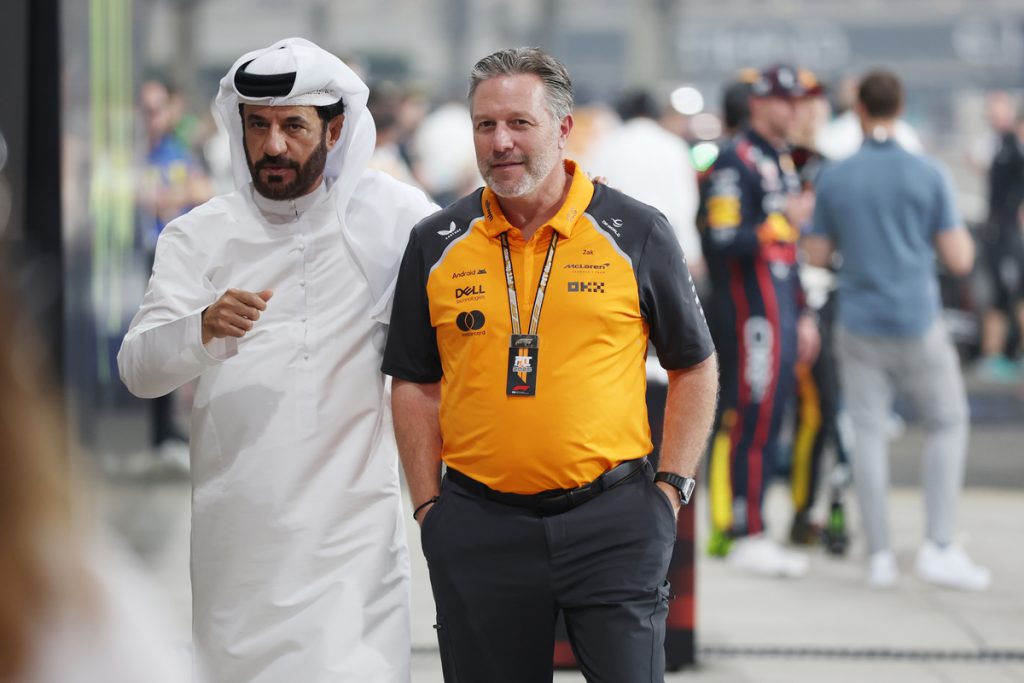
Formula 1 rarely moves with full alignment. This week, it did. The FIA, Formula One Management, and all 11 teams have signed the 2026–2030 Concorde Governance Agreement, sealing how power, votes, and responsibility will be distributed in the sport’s next era.
This is not the commercial deal. This is the control room. The agreement defines how rules are written, how fast they can be changed, and who holds leverage when consensus breaks down.
The most immediate shift is procedural. From 2026, fewer team votes will be required to pass regulatory changes, reducing the risk of gridlock inside the F1 Commission. With FIA and FOM retaining their votes, the balance tilts subtly but decisively toward the regulators. Stability is the stated goal. Speed of decision making is the real prize.
Money also moves in this deal. The FIA will receive increased financial contributions from both FOM and the teams, funding expanded stewarding, race direction resources, and governance infrastructure. Those areas have been under pressure for years. This agreement acknowledges that credibility costs money.
Stefano Domenicali called the deal “essential for Formula 1’s continued global growth,” while FIA president Mohammed Ben Sulayem said it would allow the governing body to “modernize regulatory and operational capabilities” ahead of the 2026 reset.
The timing is no accident. New power units, new cars, and new competitive balances demand clarity at the top. Before the rules change on track, the rules of control have now been settled off it.
2026 tyres revealed: Pirelli’s new look meets new dimensions
Pirelli has lifted the curtain on its 2026 Formula 1 tyre range, and while the most visible change is graphic, the timing tells a deeper story. A new chequered flag sidewall motif replaces the familiar P Zero branding that defined the hybrid era. It is a visual reset aligned precisely with Formula 1’s next technical chapter.
This is not change for novelty’s sake. Broadcast clarity matters, and tyres are one of the sport’s most consistent visual reference points. Pirelli’s updated typography and pattern are designed to read more cleanly on camera, especially under night lighting and high contrast conditions. In a championship built for global television, legibility equals value.
Underneath the new look sits a significant technical evolution. The 2026 tyres retain 18 inch rims but feature narrower tread widths, reduced by 25mm at the front and 30mm at the rear, with overall diameters trimmed by up to 15mm. These changes are tailored to lighter cars and altered aerodynamic loads under the new regulations.
The compound structure also evolves. The familiar C1 to C5 range remains, but with wider and more consistent performance gaps to encourage strategic variation. Intermediate and wet tyres keep their 2025 tread patterns, while operating windows are refined for stability rather than peak degradation games.
The reveal may look cosmetic, but the stakes are not. Tyre behaviour defines race shape, and teams are already mining early data from mule car tests in Abu Dhabi ahead of formal homologation on December 15. The real story begins when these tyres meet fully compliant 2026 cars in Barcelona testing.
Norris runs number 1: pressure becomes visible
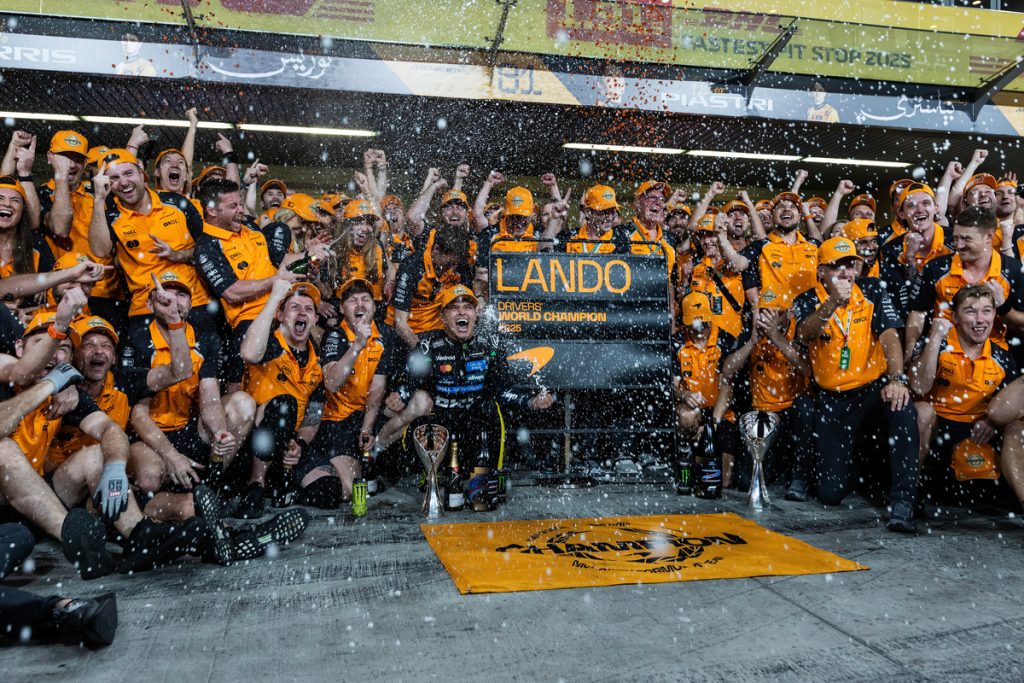
Championships change drivers, but they also change details. Lando Norris confirming that he will race with car number 1 is symbolic, yet symbolism carries real weight in Formula 1. It is a declaration that the title was not borrowed. It is owned.
Running number 1 removes the comfort blanket. Every timing screen, graphic, and onboard shot will underline who won last. Rivals see it before Turn 1. Fans see it before the lights go out. Pressure follows naturally, but clarity does too. Norris is no longer chasing the moment. He is defining it.
Norris himself framed the decision as collective pride rather than ego.
“It’s tradition, it’s there for a reason,” he said. “Everyone at McLaren gets to wear that number with pride. It’s not just mine, it belongs to the whole team.”
That sentiment matters in a sport where championships are earned by hundreds, not one.
For McLaren, the choice is also a branding and narrative win. The reigning world champion in papaya, carrying number 1 into a new regulation cycle, is a clean visual anchor for 2026. It simplifies the story for casual fans and sharpens it for rivals.
There is also a competitive message beneath the surface. Choosing number 1 signals intent. Norris is not hiding from expectation, he is stepping into it. New eras reward those who claim space early.
Defending a title is harder than winning one. Number 1 ensures that truth cannot be ignored. That is why the decision resonates. It is bold, deliberate, and unmistakably visible.
F1 Academy sets 2026 calendar: Silverstone joins the pathway
F1 Academy is attempting something deceptively complex. It is building a development pathway while still constructing its own identity. The reveal of the 2026 calendar is therefore more than a list of dates. It is a statement of intent about where the series believes it belongs within the Formula 1 ecosystem.
The structure itself matters. Seven rounds, fourteen races, and continued alignment with F1 weekends keep visibility high while maintaining logistical realism. The addition of Silverstone is particularly symbolic, anchoring the series to one of motorsport’s cultural centres. Shanghai, Jeddah, Montreal, Zandvoort, Austin, and Las Vegas provide geographic spread and varied technical demands, shaping drivers across different styles and conditions.
Calendars quietly define development. Climate swings test adaptability. Track layouts reward different instincts. Travel density affects preparation. A well built calendar creates rhythm rather than fatigue, and F1 Academy’s 2026 layout leans toward balance rather than spectacle alone.
Formula 1 CEO Stefano Domenicali framed that growth clearly.
“In just three seasons, F1 Academy has developed fantastic drivers and grown a huge and passionate fanbase worldwide,” he said.
Managing Director Susie Wolff echoed that intent.
“Our 2026 calendar reflects the momentum we’re building and the visibility we’re earning across the sport,” she said.
This points to Silverstone and Austin as markers of credibility rather than expansion for its own sake.
The real test comes later. Consistency, competitive depth, and audience retention will decide whether structure turns into sustainability. For now, the foundations are becoming harder to ignore.
Ferrari backs Larsen: the Academy becomes a real battleground
Driver markets no longer begin in Formula 1. They now start several rungs lower and Alba Larsen’s move to Ferrari for 2026 is a clear signal that the Academy ecosystem has matured. Ferrari is not simply backing promise. It is securing leverage early, aligning development, branding, and visibility before competition does.
For Larsen, the opportunity is as heavy as it is historic. Ferrari support brings structure and exposure, but it also removes anonymity. Once you carry red, every session is measured. Every mistake is magnified. That pressure is part of the test, and Ferrari has decided she is ready for it.
“Racing for Ferrari in F1 Academy is a dream come true,” Larsen said. “They’ve been my favourite team since I was a child. Wearing red feels surreal, and I’m ready to give everything I have for the Scuderia.”
It is the kind of quote that sounds emotional, yet reflects the reality of a driver stepping into a defined pathway.
For F1 Academy itself, moves like this matter. Continuity creates narrative. Fans can track progression across seasons rather than reset every year. Teams can justify investment. The ladder begins to feel tangible instead of theoretical.
The competitive effect is sharper. Factory backed drivers arrive with stronger infrastructure, clearer mentoring, and longer term planning. That raises the floor of the grid, but it can also widen gaps if rivals hesitate.
Ferrari is not alone for long. Aston Martin has signed Mathilda Paatz to its academy, Williams has added Jade Jacquet, and Alpine will place Carmen Jorda in charge of its F1 Academy programme for 2026. The pattern is clear. Formula 1 teams are no longer observing the pathway. They are actively owning it.
Feature Image: Red Bull Content Pool